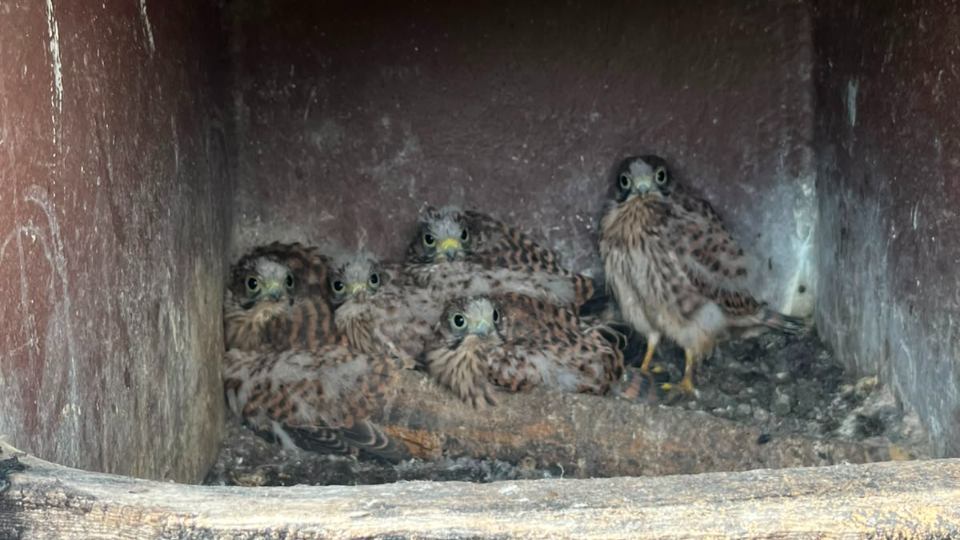
Sometimes you can forget the diversity of habitats that the Loughborough campus covers. We have meadows, ponds, orchards, parkland and ancient woodland to name a few. As such, the University is home to many different fauna and flora and provides an important landscape for biodiversity to move through, connecting central Loughborough with the outskirts of Charnwood.
At the edge of our campus, for several years, kestrels (Falco tinnunculus) have successfully nested and raised chicks. Being near to farmland, the kestrels hunt for small mammals, worms, insects and the occasional robin. They are truly impressive hunters with incredible eyesight that can even see in the UV part of the electromagnetic spectrum.
Sadly, the species has declined (37% between 1995 and 2023) and is now amber-listed. So, it is with great pleasure that we see this iconic bird of the British countryside not only calling our campus home but also breeding.
As the status of kestrels is of conservation concern, last week, local bird ringer Nigel Judson visited campus to ring the kestrel chicks. Using our mobile elevated working platform, Nigel and our on-site mechanic, Pete Atkin, went up to the nest and safely fetched out five healthy chicks. Assisted by Deputy Grounds Manager, Rich Fenn Griffin, Nigel attached the rings to the chicks.
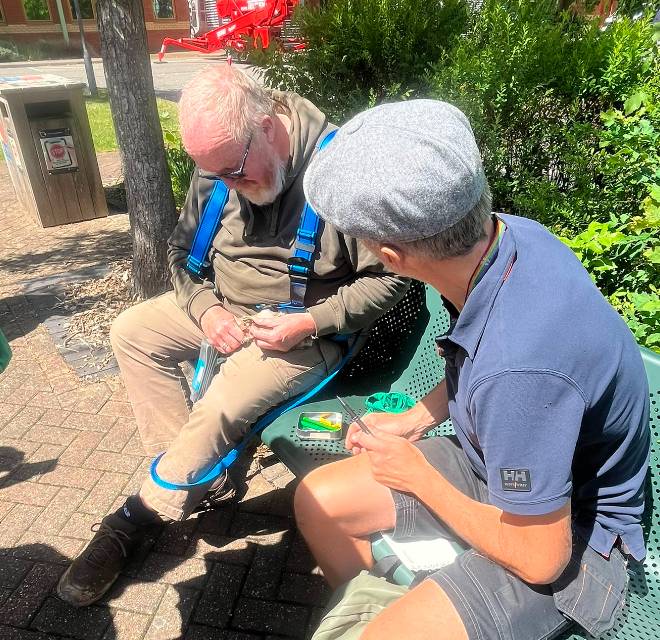
For each, they recorded the sex and the unique identifier number. This information is sent to the British Trust for Ornithology and used to monitor how the individual kestrels do in the future, should they be recaptured. This provides valuable conservation information about how the species is faring and the challenges it faces.
Rich Fenn Griffin said: “The chicks were less than impressed by their inconvenience, but it did give us the opportunity to appreciate how formidable their talons are – even when they’re not full-sized! The ringing was quickly done, and the chicks returned to the nest just in time for mum arriving with dinner. A wonderful sight (not for the mouse, I hasten to add), and a lovely opportunity to see biodiversity up close on our beautiful green campus.”