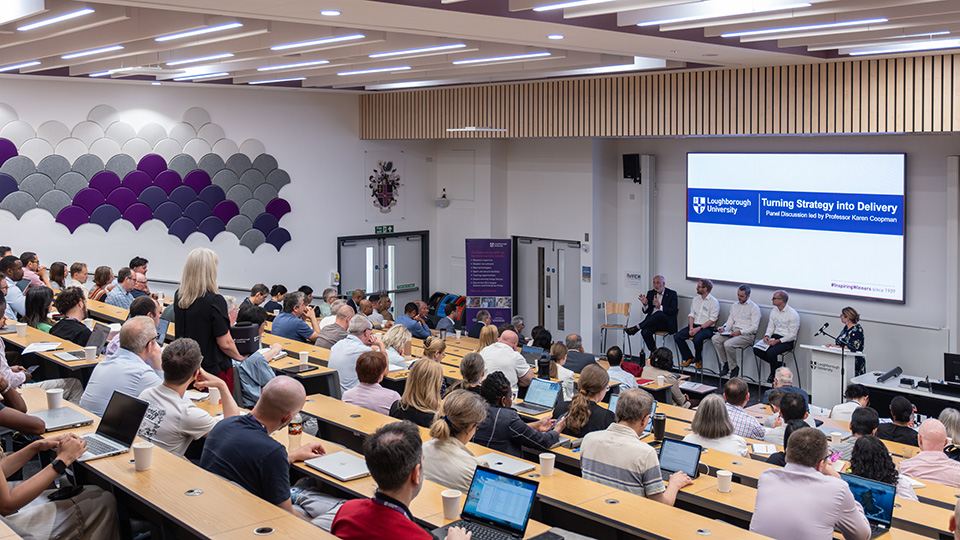
The event brought together senior leaders from across the University alongside representatives from UK Research and Innovation (UKRI), the Engineering and Physical Sciences Research Council (EPSRC), the Department for Business & Trade (DBT), the Manufacturing Technology Centre (MTC), Intelligent Energy and Innovate UK Business Connect to explore how universities can work with partners to translate research and innovation into economic and societal impact.
The timing was particularly significant, taking place shortly after the publication of UKRI's new Strategy (2026–2031) and Delivery Plan, and the Government's latest update on the Modern Industrial Strategy. Discussions throughout the day focused on innovation, investment, skills, place-based growth and the critical role universities can play in supporting the UK's future prosperity.
Aligned to the Government's priority growth sectors, the Sectoral Groups have been established to strengthen collaboration, develop new partnership opportunities and accelerate impact across strategically important sectors. Each group is led by a senior academic chair and supported by a Partnership Development Manager, creating a coordinated approach to building external relationships and delivering opportunities.
The launch also highlighted how the Sectoral Groups will work alongside the University's flagship Research Institutes in Clean Energy, Responsible Manufacturing, Digital Futures, Healthy Living, Culture and Society, and Women in Sport, providing a framework for translating world-leading research into real-world impact.
The event was opened by Professor Nick Jennings, Vice-Chancellor and President, who set the strategic context for the initiative and outlined the important role the Sectoral Groups will play in strengthening Loughborough's engagement with industry, government and funders, aligned with both the University Strategy and the UK's Industrial Strategy priority sectors.
Attendees also heard from Richard Taylor, Chief Operating Officer, alongside external speakers from UKRI, EPSRC and DBT. The programme featured sector spotlights on Advanced Manufacturing, led by Professor Anish Roy; Defence & Security, led by Professor Rajkumar Roy; and Creative Industries, presented by Katie Whyley, with additional industry perspectives from Professor Ken Young (MTC) and Dr Chris Dudfield (Intelligent Energy).
A key highlight of the day was the "Turning Strategy into Delivery" panel discussion, expertly chaired by Professor Karen Coopman, Associate Pro-Vice-Chancellor for Research and Innovation (Focus and Excellence). Bringing together representatives from UKRI, DBT, EPSRC and the Vice-Chancellor, the discussion explored how universities, funders, government and industry can work together to deliver national priorities. The session generated strong engagement from the audience, with a lively Q&A and valuable contributions from Sectoral Group Leads, academic colleagues and external partners.
Reflecting on the event, Richard Taylor, Chief Operating Officer, said:
"At the heart of our strategy is a simple but powerful idea: Creating Better Futures. Together. The emphasis is on 'together, working with our partners across industry, government, and the research landscape. It was fantastic to see so many colleagues and external partners come together around this shared ambition. The Sectoral Groups provide a valuable platform for building strategic partnerships at scale, aligned to national priorities, unlocking new opportunities and translating Loughborough's research and innovation into real-world impact."
Professor Karen Coopman, Associate Pro-Vice-Chancellor for Research and Innovation (Focus and Excellence), added:
"The launch of the Sectoral Groups represents an important step in strengthening Loughborough's external engagement. By bringing together academic expertise, industry insight and government priorities, we are creating a platform for deeper partnerships and greater impact across the sectors that matter most to the UK's future growth and prosperity."
The launch marks the beginning of the next phase for the Sectoral Groups, with work now underway to deepen partnerships, develop new opportunities and further strengthen Loughborough's contribution to regional, national and international priorities.