Dr Pedro Oliveira
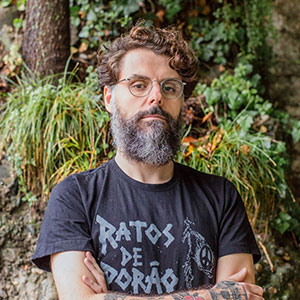
IAS Residential Fellow
Universität der Künste Berlin
Pedro Oliveira is a sound artist and researcher working across performance, installation, and writing. His work investigates how listening shapes and is shaped by technological infrastructures, with a focus on voice and migration. Through a poetic-technical approach, he explores sonic media as sites where distinct modes of listening are produced and disrupted, tracing how they are encoded in cultural and institutional frameworks to regulate subjectivity and reconfigure relations between identity and difference.
His previous research was an artistic and media-analytical study of the so-called „dialect recognition software“ in use by the German Migration authorities since 2017 in case of undocumented asylum seekers. This work was exhibited and performed at the Akademie der Künste Berlin, European Media Art Festival, Send/Receive Festival, CTM Festival, Haus der Kulturen der Welt, Museo del Mare di Palermo, Festival Novas Frequências, Akademie Schloss Solitude, the Max-Planck Institute, among others.
In his academic practice he has held Fellowships at the Leuphana Institute for Advanced Studies and the Helsinki Collegium for Advanced Studies, and has taught at the Humboldt University Berlin and the Heinrich-Heine University Düsseldorf. Currently he is part of the guest faculty in Sound Studies and Sonic Arts at the Universität der Künste Berlin. He holds a PhD, also from the Universität der Künste Berlin.
During their IAS Fellowship, Dr Silva Vieira de Oliveira will be collaborating with Dr Courtney N. Reed from the Institutes for Digital Technologies and Creative Futures.