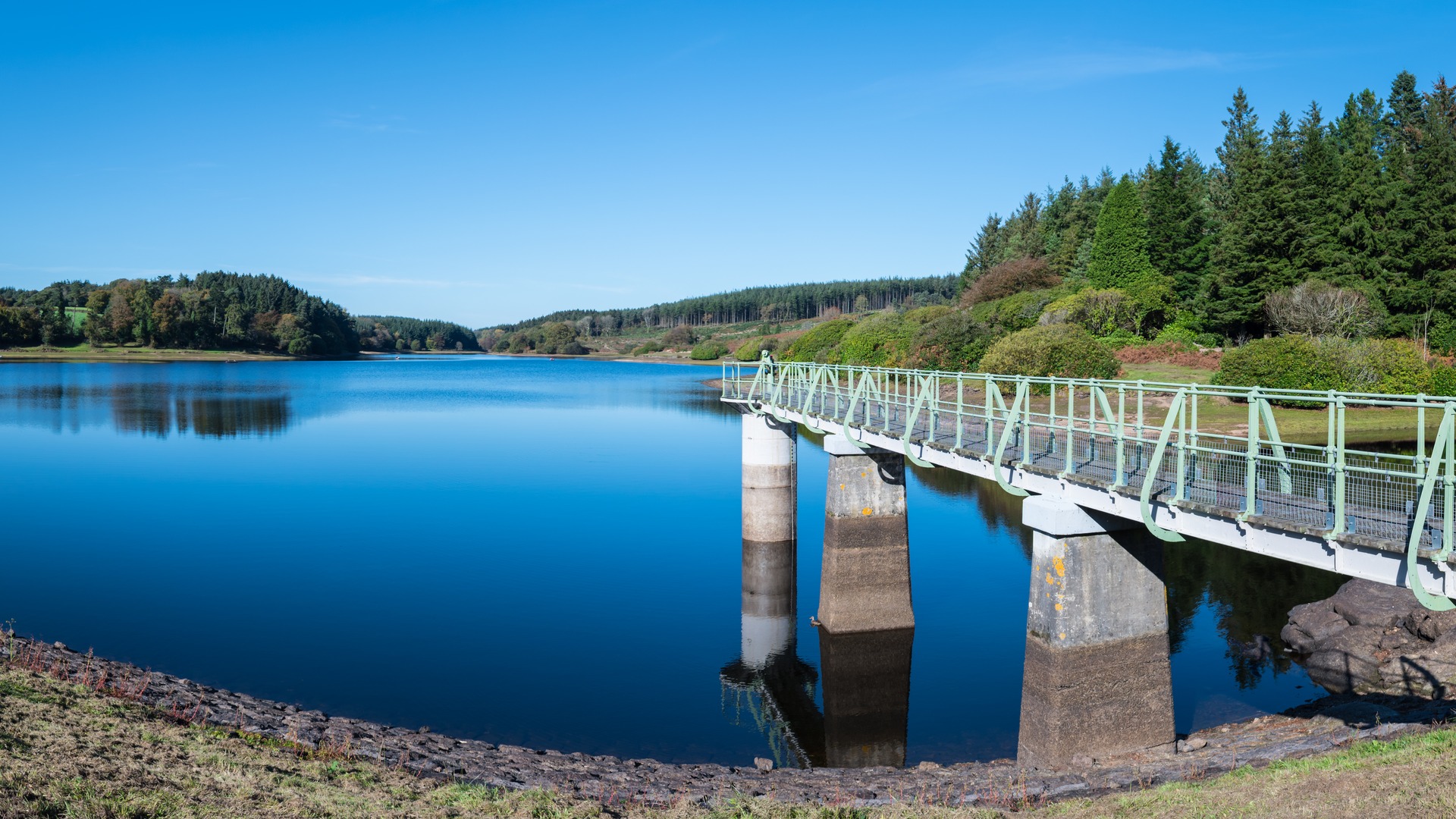
By 2027, global AI water use is predicted to be equivalent to 50% of the UK’s total annual water consumption.

As governments, regulators and industry call for urgent action on digital sustainability, Loughborough University is helping to shape the response.
Our researchers are exposing digital technology’s hidden environmental cost and developing practical solutions to help reduce it.
By challenging assumptions about the technologies we use every day, they are pioneering a new field of research and helping to build a more sustainable digital future. Digital decarbonisation.
Digital decarbonisation aims to reduce the carbon footprint of digital technologies, data practices and supporting infrastructure.
“The challenge is not to stop digital innovation, but to drive growth by being more efficient and sustainable.”
Professor of Strategy and Co-Director of the Digital Decarbonisation Research Cluster
Loughborough Business School’s Professors Tom Jackson and Ian Hodgkinson pioneered the concept of digital decarbonisation, establishing a critical field of research that is already informing the work of global organisations – including the World Economic Forum and Organisation for Economic Co-operation and Development.
Most organisations are trying to reduce their carbon footprint. However, a significant part is hidden – the impact of digital data on the environment.
More than half of organisational data may be used once or never at all. This can create an unnecessary environmental burden and financial cost. This unused data is often described as dark data or digital waste.
Storage is only part of the problem. Poor data practices increase costs, energy demand and greenhouse gas emissions. What’s more, the rise in AI energy consumption is accelerating the environmental impact of digital systems.
Professor Jackson and Hodgkinson’s work considers the whole digital lifecycle – how we create, use, share, process, store and dispose of data. Their aim is not to limit digital innovation, but to make it more purposeful and efficient.
To help organisations tackle the challenge, they have developed the Digital Decarbonisation Toolkit.
By revealing the environmental and financial cost of a data lifecycle, it supports proactive decision-making – helping to identify waste, reduce emissions and encourage more sustainable approaches.
Since its launch, the online Toolkit has received more than 150,000 visits.
Using our free Toolkit, discover how to improve efficiency, reduce costs and lower your organisation’s environmental impact.
Digital Decarbonisation Readiness Tool
Data is not free. It has a high cost, financially and environmentally.
By 2027, global AI water use is predicted to be equivalent to 50% of the UK’s total annual water consumption.
AI data centres increased their electricity consumption by 50% in 2025.

A 400-word AI prompt and 400-word response uses enough electricity to power a fridge-freezer for 26 hours.

Writing a 100-word email, using ChatGPT-4, consumes nearly 500ml (about 1 pint) of water for data centre cooling.

Our digital decarbonisation research is helping to shape how governments, international organisations and standards bodies go further to meet this challenge.
Drawing on our pioneering research, the World Economic Forum (WEF) describes digital decarbonisation as a key data management approach in a responsible AI lifecycle, eliminating or repurposing dark data, reducing storage and electricity consumption.
Digital decarbonisation and the wider AI-energy paradox were key issues discussed by world leaders at the WEF summit at Davos in 2025, prompting ongoing activity during 2026.
The research is also influencing international standards and practice through contributions to the GHG Protocol Scope 3 Corporate Standard, IEEE P7100 work on the environmental impact of AI, and the UK's AI Energy Council’s Working Group on the growing energy demands of AI.
Meanwhile, our experts directly informed the drafting of the Organisation for Economic Co-operation and Development’s (OECD) Recommendation of the Council on Digital Technologies and the Environment, guiding efforts to mitigate the environmental impact of digital technologies and has been adopted across its 38 member countries.

In what’s been described as a visionary investment, Loughborough University enabled Professors Jackson and Hodgkinson to establish the world’s first Digital Decarbonisation Research Cluster to tackle one of today’s most pressing challenges: reducing the environmental impact of digital technologies while maximising their potential to support a sustainable future.
The Cluster brings together experts from Business and Economics, Computer Science, Design and Creative Arts, Engineering, Media and Creative Industries, and Sport, Exercise and Health Sciences to address the impact of digital technologies on energy systems, natural resources, sustainability, and human health.
To expand its global reach and impact, the Cluster is developing a new generation of international doctoral researchers through a holistic, multidisciplinary approach that challenges conventional thinking. Their PhD projects are pioneering cross-cutting innovations with the potential for real-world impact.
Its research also shapes undergraduate education through dedicated digital decarbonisation lectures, equipping students with the knowledge and skills to help build a more sustainable digital future.


“Digital decarbonisation started at Loughborough. Its future will be shaped by the people who study here next.”
Professor of Strategy and Co-Director of the Digital Decarbonisation Research Cluster

Felix is examining data flows for operational compliance and reduced carbon output.

Emily’s project is exploring the impacts of new technology adoption in the creative industries.

Inish is investigating how to reduce the energy footprint of AI model design.

K-Tricia is assessing the impact of digital decarbonisation on our physical and mental health.

Miri’s PhD asks if public service ecosystems, specifically healthcare, can manage digital decarbonisation under austerity.

Rory is examining ways to bridge the corporate data-to-knowledge divide to enhance data value.

Thomai is using applied storytelling techniques to encourage digital decarbonisation and inspire change.

“The digital decarbonisation module really opened my eyes and changed my digital behaviour. It gave me valuable real-world insights that I was able to discuss confidently in graduate interviews, including with NFU Mutual where I now work as a Financial Services Professional Trainee.”
BSc International Business (2025)
The transition to net zero requires action from governments, organisations and individuals alike.
We are already taking steps.
Our University-wide digital decarbonisation campaign sparked a major cultural shift, with 67% of colleagues volunteering to take part. Together, we removed 44TB of unnecessary data, reversing a long-standing growth trend and demonstrating the power of collective action at scale.
This campaign and its impacts are just one example of the University’s wider commitment to questioning assumptions, testing new ideas and creating practical solutions to complex challenges.
A commitment that runs through all our research, teaching and partnerships.
“If we’re serious about net zero, the next challenge is not simply to make digital technology more efficient, but to rethink the demand we place on it. As AI, data and compute continue to scale, so too will their financial and environmental costs. This will force organisations to think much more carefully about what data they create, what they process, what they retain and, ultimately, what genuinely delivers value. Digital sustainability will increasingly become a business imperative, not an optional extra.”
Professor of Information and Knowledge Management and Co-Director of the Digital Decarbonisation Research Cluster

Professor of Information and Knowledge Management
View profile
Professor of Strategy
View profile
Senior Lecturer in International Business, Strategy and Innovation
View profile
Director of the Policy Unit
View profile
Professor of Sociotechnical System Design
View profile
Reader in Behavioural Medicine
View profile
Reader in Artificial Intelligence
View profileDiscover how Loughborough research is pioneering the digital decarbonisation agenda and informing international policy on AI and environmental impact.
Find out more about the Digital Decarbonisation Research Cluster and explore international policy guidance on digital technologies and the environment.
Explore Research Centre