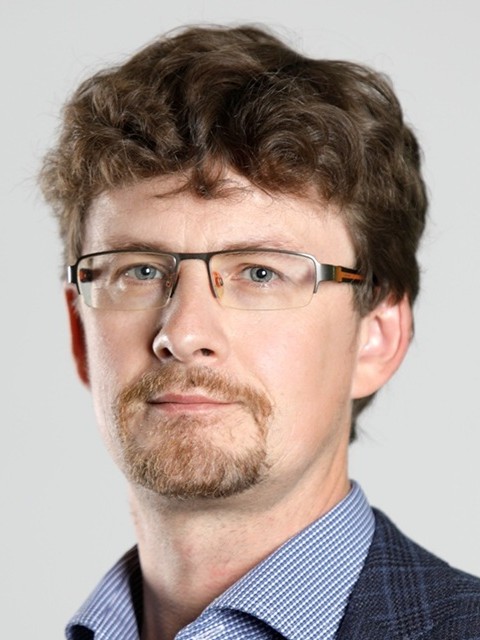
Václav received his PhD in sociology from Masaryk University in Brno, the Czech Republic, where he then worked as Assistant Professor at the Department of Media Studies and Journalism, Faculty of Social Studies. Between 2009 and 2013 he was Senior Research Fellow at the Department of Politics and International Relations, University of Oxford, working on an ERC-funded project Media and Democracy in Central and Eastern Europe. Following that, he was Head of the Political Communication Research Group at Charles University in Prague (2013-2015). Between 2016-2026 he was based at the School of Social Sciences and Humanities, Loughborough University, where he was promoted to Professor Media and Political Communication in 2025. Since February 2026 he has been working as Professor of Digital Political Communication at the European University Viadrina in Frankfurt (Oder).
His research interests encompass the relationship between media, populism and illiberalism, the impact of digital technologies on societal cohesion and on the rise of polarization, as well as media freedom and pluralism, particularly in Central and Eastern Europe.
Vaclav has published articles in leading journals including Political Communication, Information, Communication & Society, Digital Journalism, New Media & Society, European Journal of Communication, International Journal of Communication and many others. He is co-author of an open-access monograph “The Illiberal Public Sphere: Media in Polarized Societies” (Palgrave, 2024, with Sabina Mihelj) which won the 2025 Best Book Award by the American Political Science Association (APSA, Information Technology & Politics Section). He is member of the editorial board of several international media and communication journals, including The International Journal of Press/Politics, and until 2026 he served as Associate Editor of the Journal of Information Technology and Politics. Between 2016-2021 he was Vice-Chair of the Political Communication Section of the European Communication Research and Education Association (ECREA).
In his research, Václav examines the relationship between media and communication technologies and the contemporary rise of illiberalism and the erosion of democracy, focusing particularly on the role of digital platforms and the region of Central and Eastern Europe. He is also interested in the state and challenges to media freedom and pluralism, as well as in the alternative communication ecosystems and proliferation and impact of disinformation.
Among his recent research projects have been “The Illiberal Turn? News consumption, polarization and democracy in Central and Eastern Europe” (2019-2021, PI), funded by the ESRC, “Pandemic Communication in Times of Populism: Building Resilient media and Ensuring effective Pandemic Communication in Divided Societies” (2022-2024, Co-I), funded by the Transatlantic Research Partnership (TRR), or “Unpacking the Impact of Russian Disinformation in Eastern Europe: A comparative study of Poland, Romania and Serbia” (2025, PI), funded by the UKRI Network Plus ‘Shifting Global Polarities’.
Vaclav has been an active member and contributor to several international research projects and networks, including Media Pluralism Monitor (European University Institute, Florence), Digital News Report (Reuters Institute, University of Oxford) or the European Network of Political Communication Scholars (NEPOCS).
- Štětka, V.; Mihelj, S. (2024) The Illiberal Public Sphere. Media in Polarized Societies. Palgrave, OpenAccess
- Štětka, V.; Mihelj, S. (2024). The Illiberal Challenge: (Re)Conceptualizing Political Communication in Times of Normative Instability. Political Communication Reports, 30. https://nbn-resolving.org/urn:nbn:de:0168-ssoar-98560-1
- Štětka, V.; Brandao, F.; Mihelj, S.; Tóth, F.; Rothberg, D.; Hallin, D; Ferracioli, P.; Klimkiewicz, B. (2024) Beyond social media: The influence of media usage, populist attitudes, and expert trust on vulnerability to COVID-19 misinformation. The International Journal of Press/Politics, OnlineFirst, https://doi.org/10.1177/19401612241302755
- Štětka, V., & Mihelj, S. (2024). Media and Illiberalism. In Laruelle, M. (ed.) The Oxford Handbook of Illiberalism. Oxford University Press.
- Hameleers, M., Tulin, M., De Vreese, C., Aalberg, T., Van Aelst, P., Cardenal, A. S., … Štětka, V. ... & Zoizner, A. (2024). Mistakenly misinformed or intentionally deceived? Mis‐and Disinformation perceptions on the Russian War in Ukraine among citizens in 19 countries. European Journal of Political Research, 63(4), 1642-1654, https://doi.org/10.1111/1475-6765.12646
- Matthes, J., Corbu, N., Jin, S., Theocharis, Y., Schemer, C., Van Aelst, P., ... Štětka, V. & Zoizner, A. (2023). Perceived prevalence of misinformation fuels worries about COVID-19: a cross-country, multi-method investigation. Information, Communication & Society, 26(16), 3133-3156. https://doi.org/10.1080/1369118X.2022.2146983
- Tóth, F., Mihelj, S., Štětka, V., & Kondor, K. (2023). A media repertoires approach to selective exposure: News consumption and political polarization in Eastern Europe. The International Journal of Press/Politics, 28(4), 884-908, https://doi.org/10.1177/19401612211072552
- Mihelj, S., Kondor, K., & Štětka, V. (2022) Establishing Trust in Experts During a Crisis: Expert Trustworthiness and Media Use During the COVID-19 Pandemic. Science Communication, OnlineFirst, https://doi.org/10.1177/10755470221100558
- Štětka, V., Mazák, J., & Vochocová, L. (2021). “Nobody Tells us what to Write about”: The Disinformation Media Ecosystem and its Consumers in the Czech Republic. Javnost-The Public, 28(1), 90-109
- Van Aelst, P., Toth, F., Castro, L., Štětka, V., de Vreese, C., …, & Theocharis, Y. (2021). Does a crisis change news habits? A comparative study of the effects of COVID-19 on news media use in 17 European countries. Digital Journalism, 9(9), 1208-1238.
- Štětka, V., Mihelj, S., & Tóth, F. (2021). The impact of news consumption on anti-immigration attitudes and populist party support in a changing media ecology. Political Communication, 38(5), 539-560.