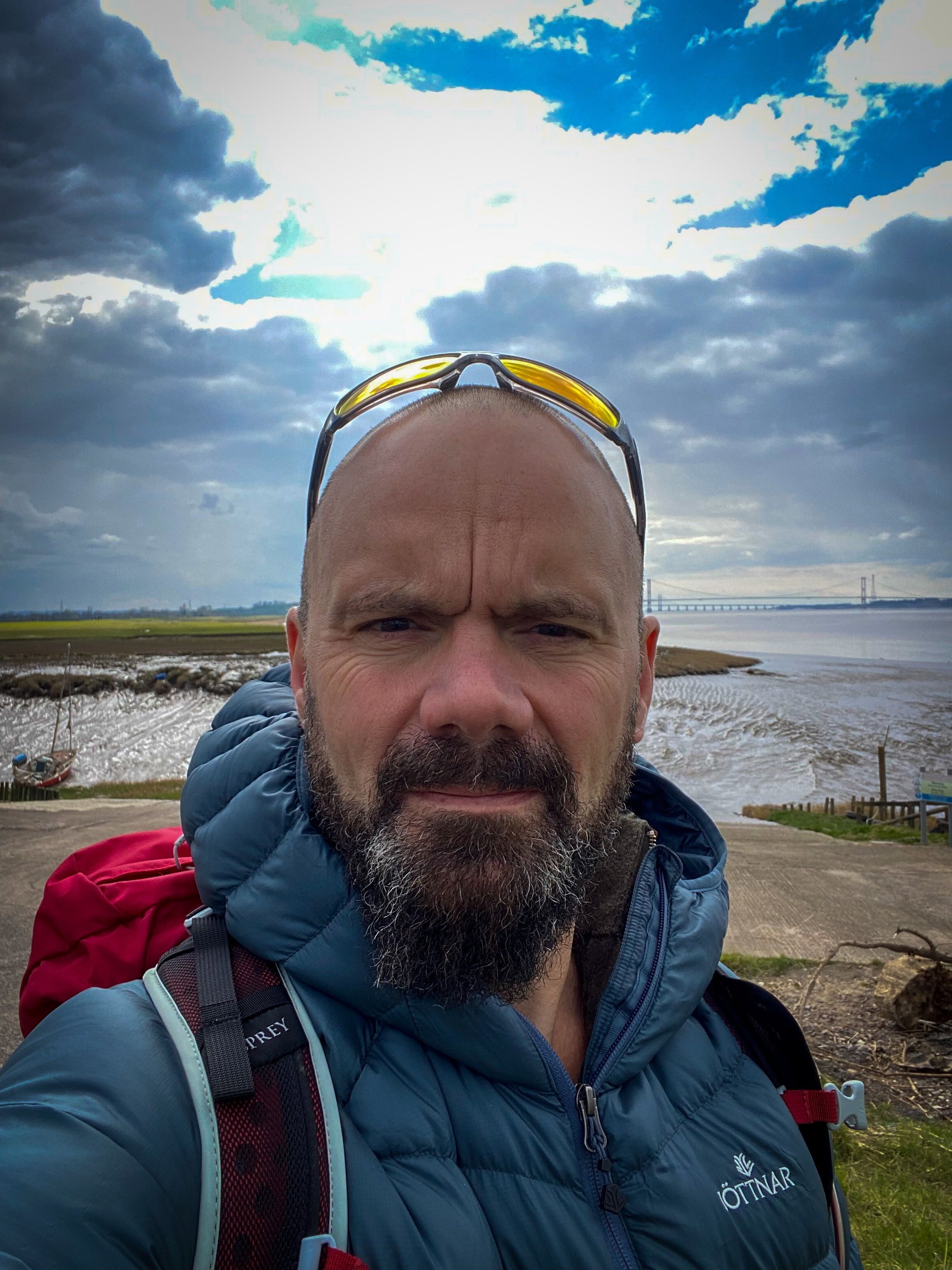
How can military leaders prepare soldiers psychologically for combat, help them cope with its pressures as it unfolds, and support their recovery afterwards? This question is central to the work of Dr Martin J Thorp MBE, a Visiting Fellow in International Relations, Politics and History at Loughborough University.
Dr Thorp holds a PhD from Loughborough University, a BA (Hons) in Security and Risk Management, an MSc in Leadership and Management, and an MSc in Organisational Psychology.
He served for 24 years in the British Army’s Parachute Regiment, becoming Regimental Sergeant Major. He deployed to Northern Ireland, the Balkans, Iraq and Afghanistan, serving as Command Sergeant Major with the NATO Training Mission on his third tour of Afghanistan. He was awarded the MBE in 2014.
After leaving the Army, Dr Thorp worked as a leadership development consultant and qualified as an organisational psychologist, specialising in individual, team and workplace resilience. His experience of combat and command, together with his work in organisational psychology, informs how he studies the pressures soldiers face and the responsibilities of those who lead them.
Dr Thorp studies the psychology of combat as it unfolds. He examines how fear, uncertainty and sustained pressure affect judgement and the ability to keep fighting, and what this means for combat effectiveness. He is particularly interested in how commanders make decisions when they carry responsibility for outcomes they cannot fully control. His work also considers how leaders prepare soldiers for the psychological demands of combat, how the effects of repeated exposure accumulate across a military career, and what supports recovery.
His multidisciplinary approach draws on war studies to understand the operational context and the responsibilities of command, psychology to examine responses to threat and pressure, and psychiatry and related clinical research to understand the longer-term effects of combat exposure. He draws on qualitative and quantitative evidence according to the question. His doctoral research drew on almost 62 hours of interviews with 37 UK veterans and 14 mental health practitioners to investigate the role of command in preparing and supporting soldiers exposed to combat and trauma.
As technology changes the battlefield, understanding the psychological demands of combat and what soldiers can sustain as it unfolds remains central to preparing for Britain’s future wars.
- Thorp, M. (2026). Shared Traumatic Pasts—Reflexivity, Remission, and the Emotional Labor of Interviewing Combat Veterans: A Research Note. Armed Forces & Society. Advance online publication.
- Kennedy-Pipe, C., & Thorp, M. (2025). Soldiering and Silences: Witnessing Child Sexual Abuse in Afghanistan. Parameters, 55(1).
- Thorp, M. (2025). Command, combat and psychological trauma: Commanders and the psychological protection of soldiers exposed to combat and trauma. Doctoral thesis, Loughborough University.