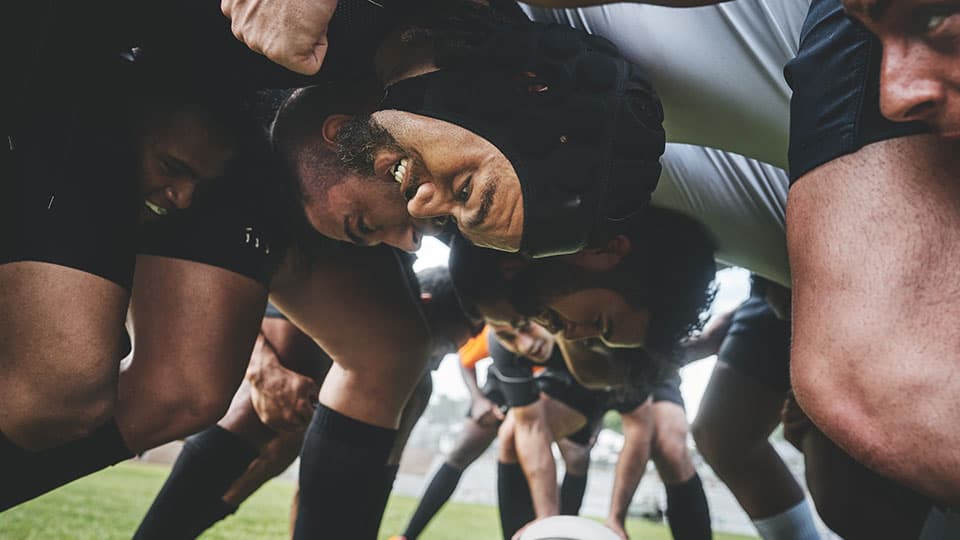
There is now widespread evidence that years of heading, tackling and collisions in football and rugby could increase the risk of dementia and other neurological diseases.
The latest – preliminary research presented at the Alzheimer’s Association International Conference in July 2026 – examined 142 former professional footballers aged 30 to 60, and 56 people of a similar age who had no history of contact sports or repeated head impacts.
The two groups performed similarly on objective cognitive tests, which measure abilities such as memory, attention and decision-making. The middle-aged retired footballers self-reported having worse mood, higher levels of anxiety and poorer cognition.
MRI brain scans were available for 124 of the former players and 40 non-players. On average, the footballers had less grey matter in several regions involved in memory, attention, decision-making and emotional regulation. Grey matter is brain tissue containing many of the nerve cells that process information.
These findings deserve attention, although they do not show that football caused the differences or that all players will develop dementia. The results are preliminary, have not yet undergone full peer review, and come from a study conducted at one point in time. Researchers will need to follow the participants for years to establish whether their symptoms or brain changes progress.
In 2020, I worked in a team which compared questionnaire responses from 468 retired male professional footballers with those from 619 men in the general population as controls. Of these, 326 of the former players and 395 of the controls also completed telephone-based cognitive dementia screening tests.
The former footballers were generally healthier, which could have protected them against dementia. Overall, they reported less diabetes, lower blood pressure and cholesterol, and less smoking and diagnosed depression – although they had experienced substantially more concussions and serious head injuries.
Average performance was similar on some cognitive tests. But on others, including tests of verbal fluency and everyday functioning, the former players scored less well. After differences such as age, education, hearing loss and health conditions were taken into account, former players had around twice the odds of falling below established dementia screening cut-offs on tests of verbal memory and verbal fluency.
A screening cut-off is a threshold used to identify people who may have cognitive difficulties. Falling below it does not confirm dementia, but indicates that further clinical assessment may be needed.
Continues...

The full article can be found on The Conversation.