People wade through floodwater because they underestimate danger – here's how to avoid risk

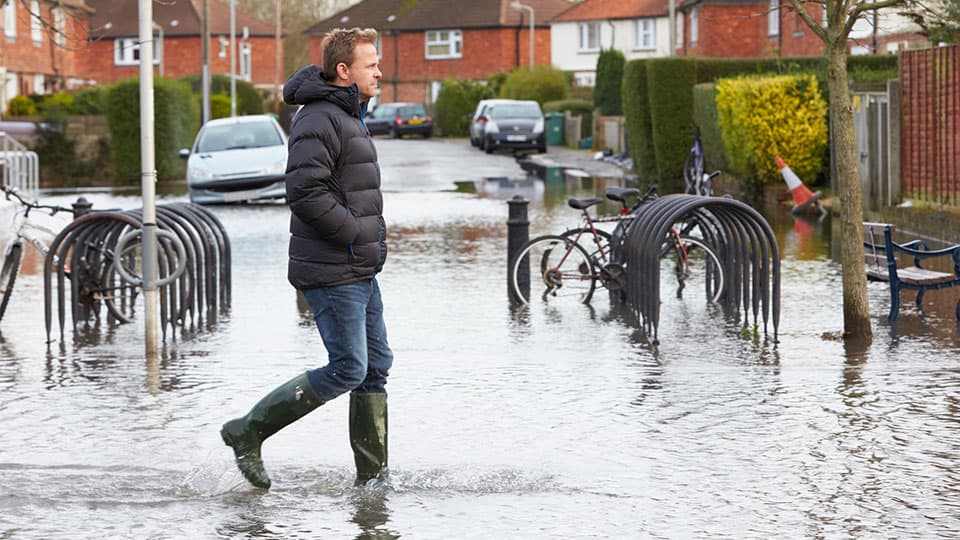
A man wearing wellington boots walking through floodwater on an urban street
Image credit: Getty Images

An opinion piece written by Dr Katie Parsons, Lecturer in Human Geography, for The Conversation platform.

A footpath home disappears beneath brown water. The other side is only a few metres away and someone has already crossed. Turning back means a long detour and you will be late. Would you wade through? This is the kind of everyday decision that flood safety advice must address.

People do not need to be thrill-seekers to enter dangerous water. They may just be trying to get home. But a familiar route can become an unfamiliar hazard within minutes.

Flooding is one of the leading causes of death during climate disasters worldwide. People can underestimate the speed or power of the water, or they might not spot underwater hazards that could mean they trip and fall.

A significant number of deaths are due to avoidable behaviour. There have been some recent UK fatalities during floods, including in 2023, when storm water rose suddenly.

In the US, the second highest cause of deaths during floods is people walking into or near water. The US National Weather Service warns just six inches (15cm) of fast-moving water can knock over an adult.

With the UK likely to see high levels of rainfall this winter, and flood risk increasing, it’s worth asking why people decide to wade through floodwater.

Watching someone wade through flooded water could make you feel reassured, even though their height, strength and route may differ from yours. Previous success at walking through a flooded road can also encourage someone to have another attempt. Yet getting through safely last time tells you little about the current conditions.

Continues...

the conversation logo

Read the full piece on The Conversation platform here.

Press Release Reference: 26/280

About Loughborough University

Loughborough is one of the country’s leading universities, with an international reputation for research that matters, excellence in teaching, strong links with industry, and unrivalled achievement in sport and its underpinning academic disciplines.
It has been awarded five stars in the independent QS Stars university rating scheme and named the best university in the world for sports-related subjects in the 2026 QS World University Rankings – the tenth-year running.
Loughborough has been ranked eighth in the Complete University Guide 2027 – out of 130 institutions. The achievement means Loughborough remains among a select group of universities that have maintained a top 10 position for more than 10 consecutive years, alongside Oxford, Cambridge, the London School of Economics, St Andrews, Durham and Imperial.
The University also ranked 9th in the Guardian University Guide 2027, out of 123 institutions nationwide and was named University of the Year for Sport in the Times and Sunday Times Good University Guide 2025 - the fourth time it has been awarded the prestigious title.
In the Research Excellence Framework (REF) 2021 over 90% of its research was rated as ‘world-leading’ or ‘internationally-excellent’. In recognition of its contribution to the sector, Loughborough has been awarded eight Queen Elizabeth Prizes for Higher and Further Education.
The Loughborough University London campus is based on the Queen Elizabeth Olympic Park and offers postgraduate and executive-level education, as well as research and enterprise opportunities. It is home to influential thought leaders, pioneering researchers and creative innovators who provide students with the highest quality of teaching and the very latest in modern thinking.