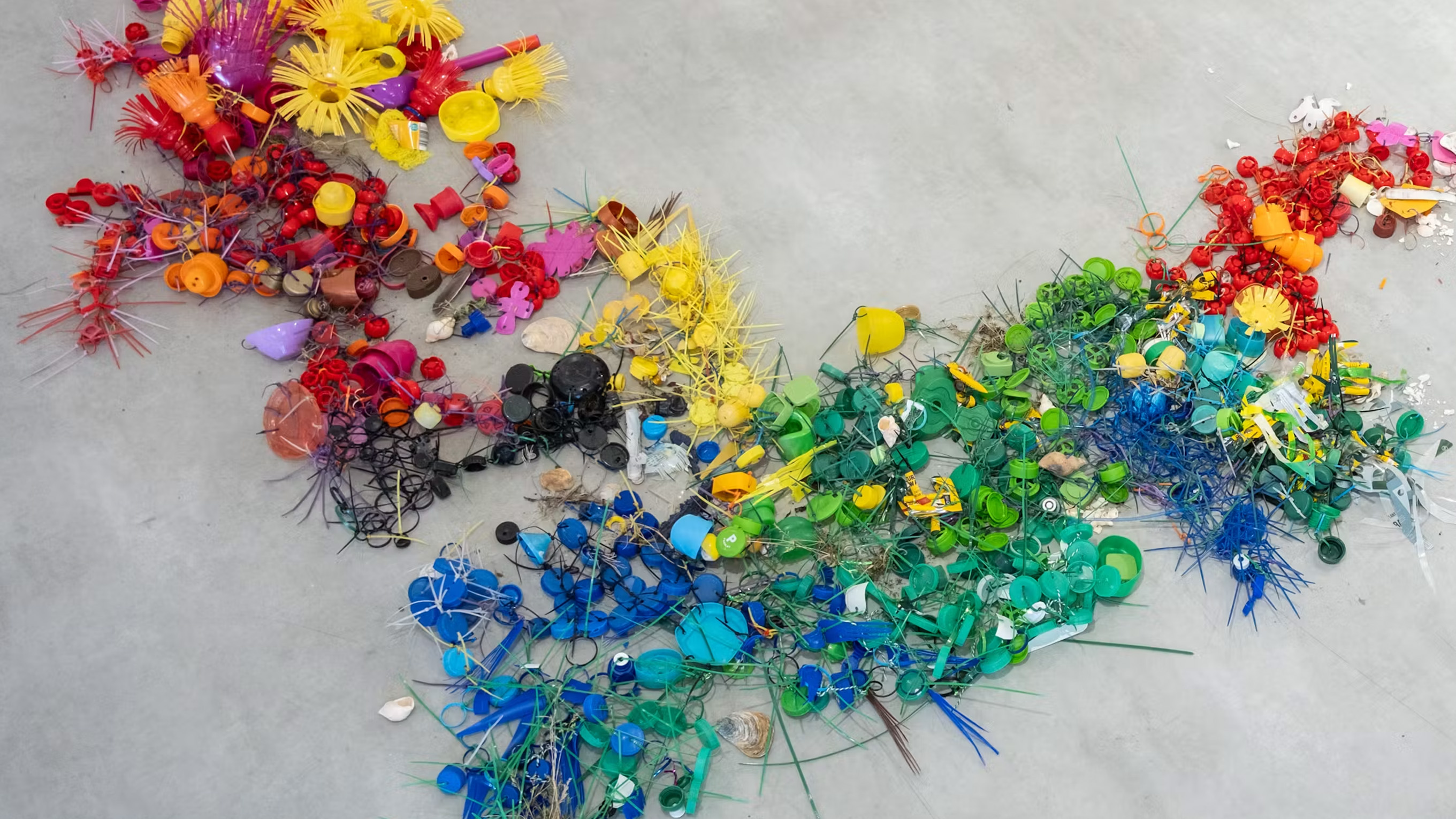
Science tells us that plastic lives forever. From oceans to urban streets, plastic pollution has become a defining geological marker of our time – entangled with nature, yet often hard to see.
While we often measure plastic pollution in tonnage of microplastics, those numbers can feel abstract. The reality is more immediate: plastic is everywhere – in our homes, on our streets, in our bodies and from soil to sea spray. Waste is designed to disappear, but the truth is that it doesn’t.
For the past 15 years, I have used art to connect the public to this issue through reuse workshops and interactive art installations made from single-use plastics. In these exhibitions, visitors don’t just look at plastic waste; they experience it as a vibrant material that is capable of sparking new environmental conversations and creative approaches to reuse.
This work comes out of my studio, KraalDesignedisposal, which I set up in 2010. KraalD began as a playful experiment: exploring the circularity of plastic waste, turning discarded objects into art and inviting audiences to rethink what we throw away.
One piece, the Xmass workshop sign, captures the feeling I get every December when recycling bins overflow and streets glitter with festive decorations. It’s whimsical, but it also carries a deeper message – my unease about excess wrapped in celebration.
A walk along the Kent coast after a storm inspired one of my early works. The shoreline was covered in seaweed, shells, jellyfish – and plastic. I picked up a sun-bleached blue toy and realised how quickly a small piece of rubbish becomes part of the ocean food chain.
Weathered and worn by the waves, plastic fragments break down into microplastics that marine animals ingest. That simple encounter on Whitstable beach and Medway river became the spark for Plastic Waste Ecologies, an exhibition I co-curated with artist Carina Brand.
Visitors to the Plastic Waste Ecologies exhibition encountered plastic clouds suspended from the ceiling. Standing beneath them, people instinctively looked up – checking the sky, noticing tiny details. I hope this inspired them to think about how plastic circulates through the air.
Continues...

For the full article by Dr Katarina Dimitrijevic, please visit The Conversation website.