

New research from Loughborough University suggests that the loss often echoes through entire communities, affecting friendships, identities and local support networks in ways that statistics cannot capture.
The project, After Last Orders?: A biographical exploration of the impact of UK pub closures, explores what happens to people and places after pubs close.
Funded by the Leverhulme Trust, the study collected detailed stories from people connected to pubs across the UK, including owners, staff, customers and local residents.
Researchers carried out seven in-depth case studies of pubs in different settings such as rural villages, suburban neighbourhoods and urban areas. Across these sites, they conducted interviews with dozens of participants and held focus groups to understand how closures unfold and how communities respond.
Dr Thomas Thurnell-Read, of Loughborough University, who led the project, said: “Pubs often play a much bigger role than simply serving drinks.
“For many people, they act as informal community hubs where friendships are formed, local news is shared and individuals who might otherwise feel isolated find companionship.
“When these venues close, communities can lose an important social anchor.”
Former staff and regulars described the pub as a place where relationships were built over years. In some cases, people said the closures removed one of the few spaces where different generations and backgrounds could regularly mix.
The research also highlights the emotional impact on workers whose jobs involve more than hospitality.
Pub staff often help create welcoming environments and social connections, meaning closures can erase both employment and valued social roles.
Key findings:
- Pubs are vital community hubs, providing spaces where friendships form, local news is shared and people find everyday social connection
- Pub closures carry a strong emotional impact, with staff and regulars often describing a sense of grief and loss when a venue shuts
- Hospitality workers lose more than employment, as their roles often involve building relationships and maintaining a welcoming social space
- When pubs close, communities lose shared spaces where people of different ages and backgrounds regularly mix
- The disappearance of a pub can change a neighbourhood’s identity, removing a familiar landmark that holds memories and local history
The project also highlights how closures can change the character of neighbourhoods. A pub often acts as a visible symbol of local identity and history.
When it disappears, residents may feel a loss not only of a meeting place but of part of their community’s story.
More broadly, the research reflects a national trend. More than a quarter of British pubs have closed since 2000, raising questions about what these changes mean for community life across the country.
By focusing on the personal stories behind pub closures, the researchers hope the project will encourage a wider conversation about the social value of pubs and the role they play in everyday life.
The findings suggest that debates about the future of the pub sector should consider not only economic factors but also the social connections and sense of belonging these venues help sustain.
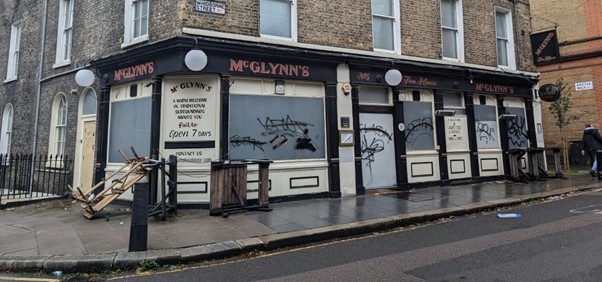
Images: The Three Lions in Meden Vale, Nottinghamshire and McGlynn's in Kings Cross, London – both part of the After Last Orders project.
Dr Thurnell-Read is available for comment on stories related to UK pub closures.
ENDS