I’m passionate about sustainable design practices and how they affect people and the planet. So when it came to deciding on a concept for my final year project, I knew I wanted to do something that was grounded in real needs and insights.
I settled on the idea of developing a toolkit that will help connect residents in urban areas to more opportunities in their local neighbourhoods, which will in turn create more resilient and connected communities.
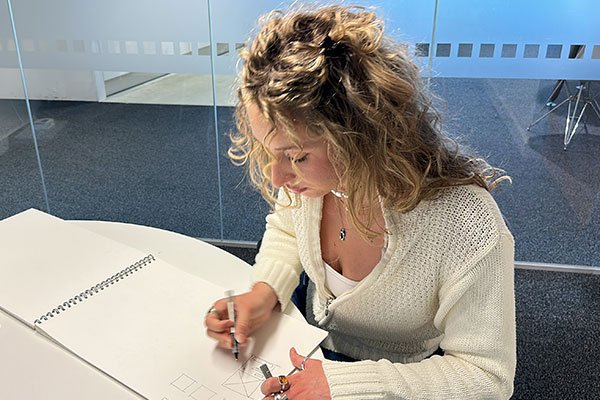
I started by doing a lot of research into green gentrification and how, as green spaces develop, they're often not accessible to a large proportion of the local population. This led me down the road of looking at community engagement and how that could be used to tackle a lot of issues such as social isolation and antisocial behaviour.
I collaborated with council stakeholders throughout the design process to help shape my project’s direction and define where the biggest opportunities for real impact lie.
The result is a digital platform that I’ve called Locally – a play on ‘local’ and ‘ally’. What it does at its core is partner with local councils to identify hyperlocal needs and prioritise target groups or areas. It then takes that data and develops a tailored engagement strategy.
Residents can easily connect with community groups and volunteering opportunities via the app I’m developing. They can input things that they're interested in and skills that they might have, and they're matched to convenient opportunities within their neighbourhood.
It also enables community groups to collaborate with other similar groups, in ways such as sharing resources and potentially co-hosting events. All these different streams then help to create resilient and more self-sufficient neighbourhoods, essentially taking pressure off statutory services within the council.
I’ve found it hard to keep my project focused and not try to solve everything at once. I also struggled to ensure my project was innovative yet also realistic, and that one did not cancel out the other. I overcame these issues by getting diverse opinions on my work, and by having a clear understanding of who my users were and what needs I should be prioritising.
I’ve also never designed an app in its entirety, so that’s been a new challenge for me, which I've tried to embrace. I've designed sections of an app before, so it's really interesting to pull all those things together and understand how everything fits together.
The resources that have been available to me at Loughborough have really helped shape the direction of this project. We’ve had many workshops on ideation, user journey mapping and value proposition canvas mapping that I feel have been instrumental. The Design School staff are also incredible – my tutors have helped me so much and I wouldn't really be where I am without them.
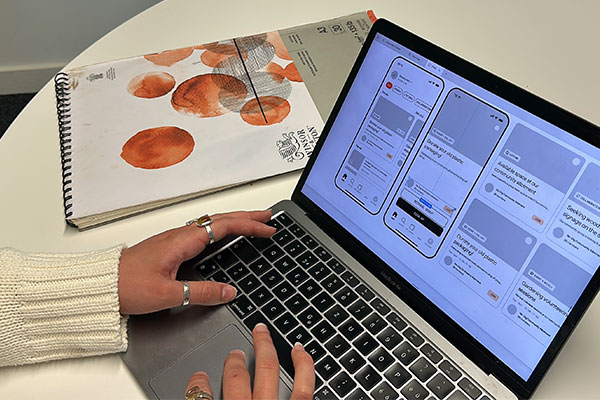
I'm really excited to have my work shown at the Degree Show. My project spans across physical, spatial and digital touchpoints, so I’m hoping there will be something for everyone to appreciate when they see it. I wanted to be able to touch a lot of people in different ways because that's what community engagement can do.
My time at Loughborough has opened my eyes to the versatility of design and shown me how different skills can be applied in diverse contexts. After I graduate, my goals are to move into some kind of design consultancy, more specifically looking at user experience or service design. Working on this project has helped me to develop essential skills for that, and has also given me the opportunity to develop skills I learned over my placement year.
Taking part in the Degree Show have truly helped define who I am as a designer. It’s pushed me to create something that I’m really proud of and reflects the kind of designer I want to become.