Bone health in postmenopausal women: The effect of Exercise with or without Antiresorptive Therapy for Osteoporosis (BEAT-OP)
Loughborough University is conducting a research on how exercise affects bone strength in postmenopausal women.
Bone loss after menopause increases the risk of hip fractures, affecting independence and quality of life.
This study aims to evaluate the effects of a 12-month, brief home exercise programme on bone structure in postmenopausal women, both with and without osteoporosis treatment. We will explore if the effects differ between women who take osteoporosis medication and those who do not.
While similar exercise programmes have been shown to improve bone strength in various populations, this research is the first to specifically examine whether exercise could enhance the effects of medications. The findings aim to provide valuable insights into managing osteoporosis and reducing the risk of related fractures.
Who is needed for this study?
We are looking for:
- Postmenopausal woman aged 55–75
- Bone density in average to low range (this will be check at your initial visit)
- Either:
- Taking certain osteoporosis medication for at least 12 months (e.g. alendronate, ibandronate, risedronate, zoledronic acid), or
- Not taking any osteoporosis medication (including HRT) and not planning to start in the next 12 months
- Not regularly taking part in high-impact exercise (e.g. jumping) or lifting very heavy weights).
You may not be able to join if you have:
- Any injuries or medical conditions preventing safe exercise.
- A body mass index >35 kg/m2.
- A hip joint replacement.
Measurements sessions
If you agree to participate, we will invite you to Loughborough University for an initial visit during which you can ask any further questions and sign an informed consent sheet.
During the study, we will invite you to visit Loughborough University to collect study measurements at the beginning, at the mid-point (6 months), and at the end of the 12-month training period, with each visit expected to last no more than two hours.
Additionally, we will ask you to visit Glenfield Hospital, Leicester at both the beginning and end of the study to undergo bone scan using computed tomography (CT) scan.
Measurements will be taken at the beginning, middle and end of the study including:
- Anthropometry: your height and weight.
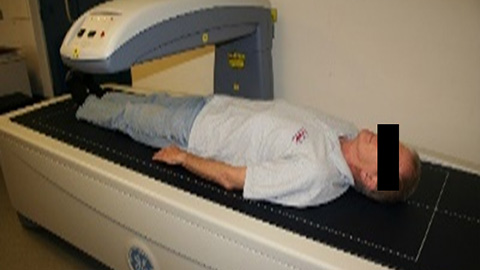
- Dual Energy X-ray absorptiometry (DXA) scan: to measure the bone density of your hip, spine, and whole body.
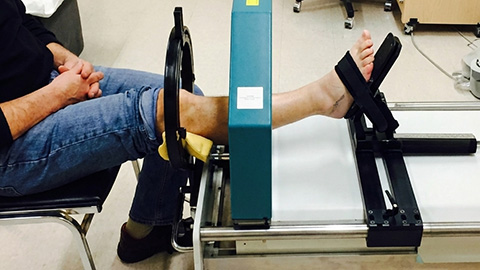
- Peripheral Quantitative Computed Tomography (pQCT) scan: to measure the three-dimensional (3D) structure of your bone in the lower leg.
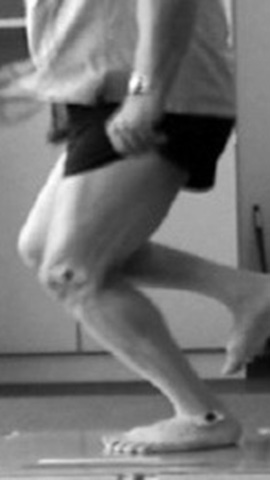
- Hopping test: We will attach some small reflective markers over some of your joints and use a motion capture camera system to track these. This system only records the markers and will enable us to analyse your movement during the hops.
- Blood sample: to examine changes in the metabolism of bone.
- Questionnaires: about your background, medical history, physical activity level, calcium intake and fall efficacy. A monthly follow-up questionnaire will be administered online or by phone to inquire about any injuries, soreness, or discomfort.
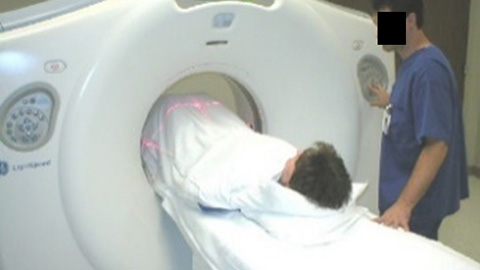
- CT scan: to evaluate the 3D structure of your hip joint. We will provide transport from Loughborough to Glenfield Hospital.
Exercise programme
You will be asked to do some brief hopping exercises at home. That will be just on one leg so the other leg acts as a control, to demonstrate how the bone would have changed without exercise. The exercises will build up gradually over the first few months according to how you are getting on.
Weekly group exercise sessions will be held at Loughborough university or online option will be offered to check that you are exercising correctly and whether you are ready to increase to the next level.
The possible benefits of participating
- The exercise used in this study had positive effects in previous study on healthy postmenopausal women improving their bone density. You may experience similar benefits by participating and helping to reduce the risk of potential fracture.
- Find out about your bone health and other measurements .
- Support osteoporosis research that may benefit other women similar to your condition.
How to get involved?
To get involved email Nora Alohaly or Professor Katherine Brooke-wavell, or phone the study team on 01509 226207.
Please fill out our screening questionnaire that includes a few questions which allows us to check if you might be eligible. Based on your answers, we will get in touch to share more details, answer any questions you may have, and arrange a formal consent process.
Who is doing this research?
This study is part of a PhD project supported by Loughborough University. It is carried out by:

Loughborough University

Loughborough University

University Hospitals Leicester NHS Trust