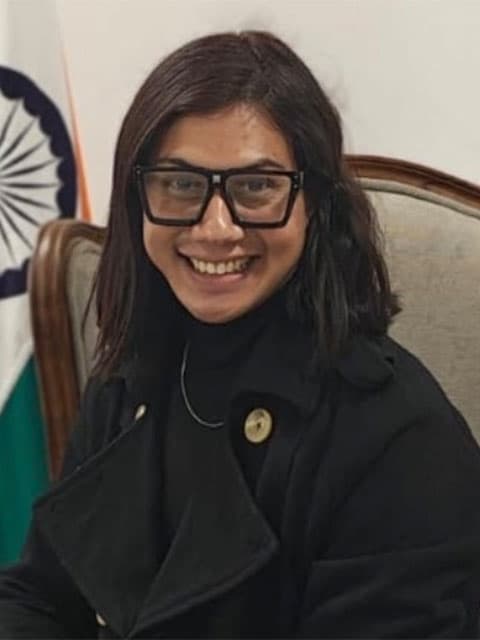
Abhijeet Singh Dewari, who writes under the pen name Ishu Dewari, is a doctoral researcher in the School of Sport, Exercise and Health Sciences at Loughborough University. Their research interests span anthropology, healthy ageing, human health, physical activity, movement, culture and wellbeing, with an interdisciplinary focus on understanding people and communities through both scientific and lived-experience perspectives.
They completed their BSc (Hons) in Anthropology at the University of Delhi and subsequently pursued postgraduate study in Biological Anthropology. Their research has explored healthy ageing, cognitive frailty, human growth and development, community health, sports and dance, and the lived experiences of individuals and communities. Their publications include work on healthy longevity, cognitive frailty, loneliness and living arrangements among older adults, and health and injury experiences among Indian classical Kathak dancers.
Their academic achievements include receiving First Prize in a National Argumentative Essay Writing Competition on “Simultaneous Election in India: One Nation, One Election”, organised by ICSSR, New Delhi, and the Ministry of Education, Government of India. They have also contributed to climate-change policy discussions, bringing anthropological perspectives to sustainability, communities and the human dimensions of environmental change.
Ishu's wider interests include ethnography, Himalayan studies, visual anthropology, emotions, spirituality, dance and creative writing. They are a member of CARTA, the American Anthropological Association and the Physiological Society, and have contributed scholarly book reviews to the Anthropology Book Forum of the American Anthropological Association. They have been referred to as a “Gen Z anthropologist” in academic circles, reflecting their engagement with contemporary questions in anthropology and their efforts to connect research, culture, policy and society.
My research is interdisciplinary, drawing on anthropology, human biology, health sciences and social sciences to explore how biological, social, cultural and environmental factors shape health and wellbeing across the life course. As a doctoral researcher at Loughborough University, my work focuses on ageing, health, physical activity, movement and lived experiences.
My research interests include healthy ageing, longevity, cognitive frailty, human growth and development, biological anthropology, kinanthropometry, community health, sports and dance. I am particularly interested in combining quantitative approaches with ethnographic and community-based perspectives to understand health in its wider social and cultural context.
My previous research has examined healthy longevity and cognitive frailty among older adults, loneliness and living arrangements, and health and injury experiences among Indian classical Kathak dancers. I also have a strong interest in Himalayan communities and in how culture, spirituality, environment and changing social conditions influence health and wellbeing.
Another area of my work is the relationship between climate change, communities and human wellbeing. I have engaged with climate-change policy discussions, contributing anthropological perspectives on sustainability, environmental change and their social consequences. I am interested in ensuring that community experiences and knowledge inform evidence-based policy and that climate responses recognise human and cultural dimensions alongside environmental and scientific priorities.
My research is guided by a commitment to interdisciplinary, people-centred scholarship. I seek to connect scientific evidence with lived experience and contribute research that can inform academic knowledge, policy, practice and community wellbeing.
My teaching experience includes Human Growth and Development and Anthropometry, with a focus on introducing students to concepts of human growth, development, body composition, physical variation and anthropometric assessment. I have also delivered guest lectures on healthy ageing, covering biological, social and functional aspects of ageing and the factors that contribute to healthy longevity and wellbeing.
In addition to teaching, I have contributed to academic learning and knowledge exchange through presentations at conferences, seminars and professional meetings. I have particularly engaged with the South Asian Ageing Network (SAAN), delivering presentations and sharing research on ageing, health and wellbeing in South Asian populations. These experiences have allowed me to communicate research findings to diverse academic audiences and engage in discussions around contemporary challenges in ageing and population health.
My teaching and academic engagement are informed by an interdisciplinary approach, connecting anthropology, human biology, health sciences and social perspectives. I aim to make complex concepts accessible while encouraging students and audiences to think critically about the biological, social, cultural and environmental dimensions of human health, growth and ageing.
Outside academia, I am a trained Kathak dancer, tabla player, flautist and Hindustani vocalist. I am also a poet, fiction writer and author of *A Man is Equal to a Coin*. Diary writing is an important part of my life and a way of reflecting on experiences, people and emotions.
As a researcher and ethnographer, conversations are an integral part of my life. I enjoy meeting people, listening to their stories and learning from different perspectives and cultures. I speak eight Indian languages, which has helped me connect with diverse communities and appreciate the richness of India’s linguistic and cultural landscape.
I value simplicity, gratitude and meaningful human connections. I also enjoy meditation and spending time in spiritual reflection. For me, these practices provide a sense of balance, perspective and inner calm. More broadly, I try to live with the belief that even small acts of kindness, creativity and understanding can contribute towards making the world a more beautiful place.