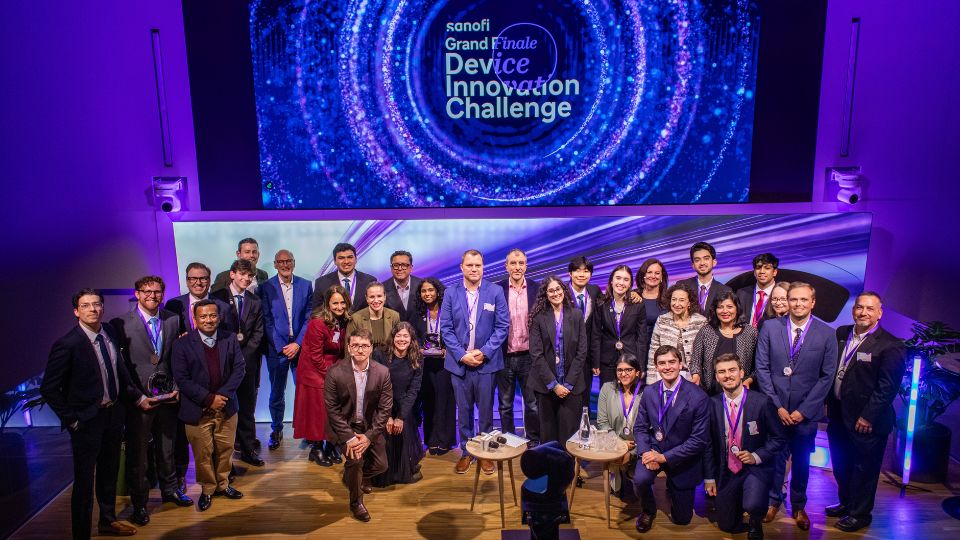
Over several months, Damini took part in this industry-led programme, which challenged students to develop forward-thinking, patient-centred medical devices through iterative design, expert mentoring, and high-level pitching. The competition culminated in final presentations at Sanofi’s global headquarters in Paris.
The challenge began in June 2025, at a time when Damini was balancing both her placement at Mima Group and an internship with Open Style Lab. Despite the demanding schedule, her team’s concept quickly stood out. By early October, they were selected as one of the top five teams, earning a place in an intensive mentorship programme with designers from IDEO and experts from Sanofi.
After a rigorous 40‑minute pitch and Q&A session in December, the team advanced to the final three, securing their place in the January 2026 finals in Paris. Damini’s contribution was particularly significant: she was the only Industrial Designer across the top three teams, leading the physical product design, form development, and user-centred design strategy alongside engineers and medical students.
Their third-place finish is especially impressive given the scale of the competition: 86 entries, 400 students, and 114 universities worldwide, including leading institutions such as Harvard and MIT. Damini proudly represented Loughborough University’s School of Design and Creative Arts on this global stage.
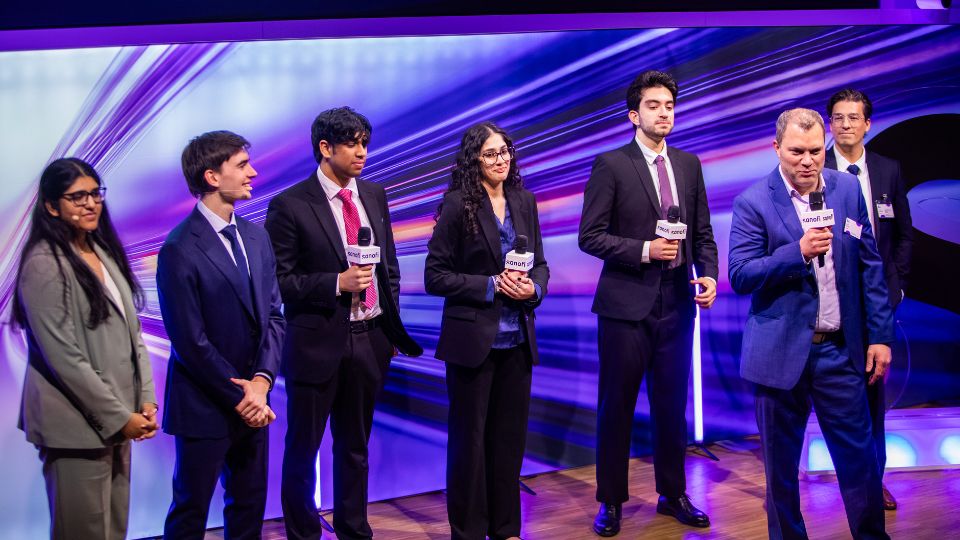
Teams were tasked with answering the following brief:
“How might we envision bold, new possibilities for large-volume drug delivery devices that are digitally enabled, connected, user-centric, and responsive to the evolving needs of patients?”
Damini’s team chose to focus deeply on the patient experience. Their concept proposed a subcutaneous drug-delivery system designed to reduce the physical and emotional burden of repeated injections for people managing long-term conditions. The device aimed to:
- support discreet, continuous medication delivery
- improve treatment adherence
- increase patient autonomy
- reduce clinic dependency
- integrate seamlessly into daily life
Their innovation reframed subcutaneous therapy through a human-centred lens—combining intuitive interaction, adaptable medication management, and supportive digital feedback to shift care from reactive treatment to proactive, empowering self-management.
Reflecting on the experience, Damini shared:
“This experience was genuinely life changing for me — one that demanded constant learning and growth — and it became one of the most formative and rewarding periods of my development as an industrial designer. Designing in a medical context strengthened my commitment to inclusive, human-centered design. I feel incredibly grateful to have worked alongside such a talented and motivated team, whose skill, passion, and commitment made the experience really special.”
The team’s success also brought a significant award, with the potential for further venture investment still under consideration. Following their final pitch, they had the opportunity to network with senior Sanofi executives, IDEO mentors, and leaders from across the medical innovation sector. Damini also spoke with Brendan O’Callaghan, Executive Vice President at Sanofi, about her role and future ambitions.

The team brought together a diverse mix of expertise:
- two UCL medical students specialising in engineering and clinical insight
- a UCL Medical Innovation and Enterprise student leading business strategy
- a University of Sunderland medical student exploring patient experiences
- and Damini, leading industrial and user-centred design
Their shared experience—whether through placements, patient-facing work, or industry internships—strengthened their ability to design with empathy and real-world understanding. Damini’s placement year at Mima Group, with its strong emphasis on inclusive and human-centred design, played a key role in shaping her approach and advocacy for user needs throughout the project.
As the team returns to focus on their final year of study, they remain open to future collaboration opportunities. For Damini, the challenge has sparked a new passion for medical device design—an area she once felt hesitant to enter but now sees as an exciting future pathway. This aligns closely with her deep interest in women’s health, which is also the focus of her final-year project.
Human-centred and inclusive design remain at the heart of her ambitions as she prepares for life after graduation.
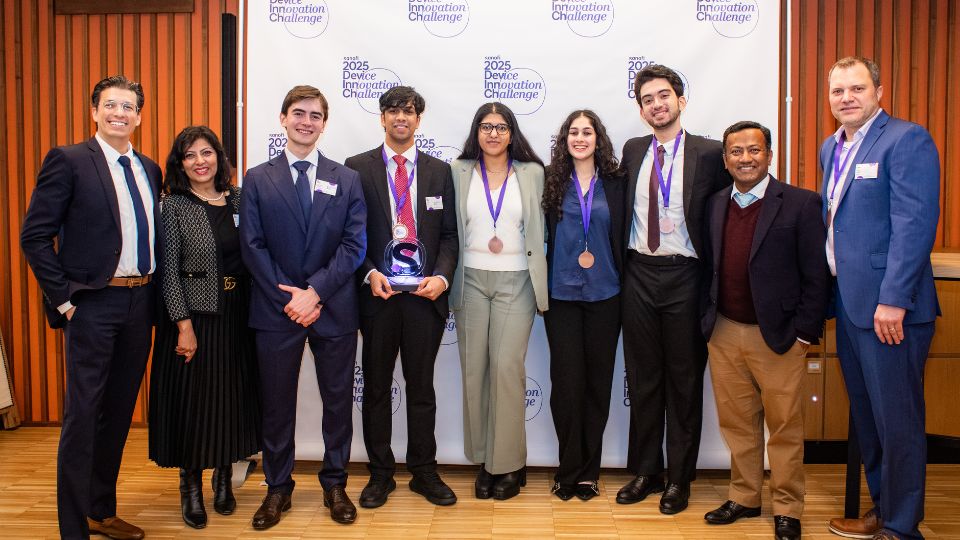
We are incredibly proud of Damini’s dedication, creativity, and resilience. Her success in this global competition reflects the strength of the Industrial Design programme and our commitment to nurture designers who lead with empathy, innovation, and purpose.
We look forward to seeing where her talent takes her next!