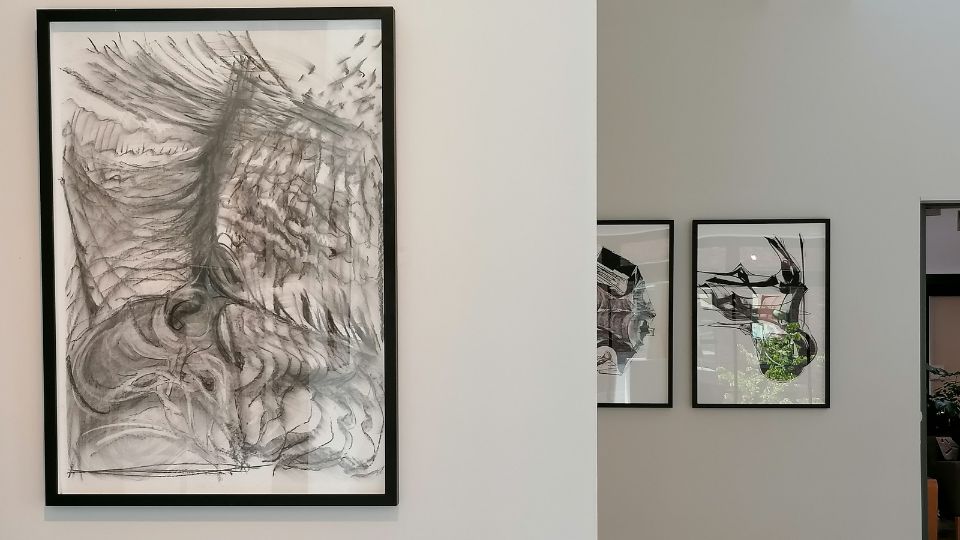
Sam Metz’s work, Drawing as Stimming, will be included in the Government Art Collection 2026 as part of this year’s Art X UK collecting programme. The artist expressed delight at the acquisition, noting the importance of seeing stimming acknowledged as an aesthetic form within a major national collection. The achievement has been supported by the Yorkshire & Humber Visual Arts Network, The Art House, and Art X UK, whose recognition has played a key role in the development of Metz’s practice.
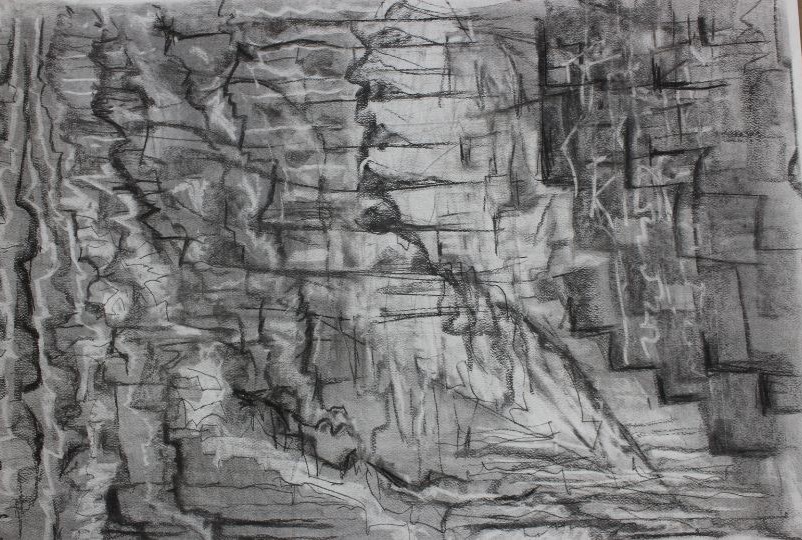
Drawing as Stimming, created with charcoal on cartridge paper, emerges from a process that is both conceptually and physically grounded in stimming. Metz describes the drawing as not only representing stimming but being made through it. The act of drawing became an experimental space for movement—leaning, pushing, and responding to the resistance of the paper.
As an autistic artist with low vision, Metz often experiences challenges with proprioception. Working at a large scale enabled a clearer sense of bodily boundaries, allowing the drawing to reaffirm presence and physical limits.
The work’s surface is built through repeated gestures: drawing, smudging, erasing, and redrawing. These layered marks capture stimming in action, not as a response to overwhelm—as it is often framed in medical contexts—but as a rhythmic, joyful, and intentional mode of being.
Metz’s practice asserts stimming and visual impairment as valid and generative ways of knowing. The drawing holds the trace of repeated movement, offering a tactile record of pressure, sensation, and embodied knowledge.
The acquisition places Metz’s work within a wider cultural dialogue about neurodivergence, embodiment, and alternative forms of perception. Their practice continues to challenge and expand understandings of how knowledge, movement, and sensory experience can shape contemporary art.