A pledge, not a programme
The Conservative Party's Britannia Shield may prove to be little more than a conference headline. Within hours of the announcement, Kemi Badenoch was distancing herself from the "British Iron Dome" label her own party had used to promote it. Yet the questions the proposal raises are serious, and they deserve public debate well beyond party politics.
Britain does need to consider how it would protect its population and essential infrastructure from missile and drone attack. But that debate should be broadened before it narrows into a contest over which system to buy or how much to spend. What threats do we realistically face? Which is the most likely and which the most devastating? And are there cheaper or more effective ways of reducing them than an expensive, advanced technology shield?
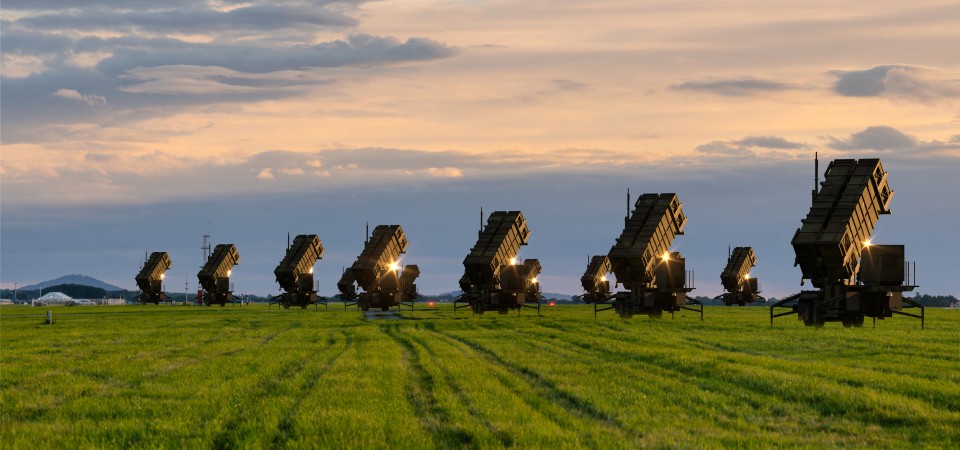
Announced on 6 October, Britannia Shield would commit up to £10 billion over ten years to radar, command and control systems, interceptor missiles, counter-drone capabilities and larger missile stockpiles. The Conservatives promise a "minimal deployable capability" within their first term, with the priority being critical national infrastructure and military bases, including those overseas. It is a policy pledge from an opposition party, not an approved procurement programme.
The gap between two expert figures illustrates the problem. General Sir Richard Barrons told the House of Commons Defence Committee in July that an entry-level "Iron Dome" for Britain would cost about £80 billion over ten years. RUSI's Sidharth Kaushal told the BBC that £10 billion would "probably cover" what the UK actually needs, but would not buy an Israeli-style multi-layered system. Both can be right, because they describe different levels of protection against different threats.
The threat
A realistic threat assessment must distinguish an adversary's capability to attack Britain from its intention to do so and the circumstances in which it might. An isolated strike on an overseas base, sabotage using a locally launched drone and sustained Russian strikes during a NATO war are very different problems. Planning should address credible severe contingencies without treating every technically possible attack as equally likely.
Russian cruise missiles warrant particular attention. Kaushal describes the British problem as far narrower than Israel's: mainly Russian cruise missiles approaching from the north. Northern approaches matter, but they should not become a fixed assumption, because air and sea launch platforms complicate the geography. Short-range ballistic missiles fired from Russian territory cannot reach Britain, yet that says little about longer-range weapons or about British bases closer to an adversary.
The gravest case is nuclear. Zircon is widely described as nuclear-capable, although it is not publicly known whether a nuclear version exists. Russian leaders have repeatedly signalled since 2022 that they could resort to nuclear weapons if faced with a threat they cannot meet by other means, a risk explored in The Conversation in 2022. Against conventional warheads, a defence that stops most incoming missiles is a success. Against nuclear warheads, a single failure is a catastrophe.
If Britain needs a shield at all, it should be judged against the threat that is both credible and most devastating. That may well be a nuclear-armed hypersonic missile launched from a Russian ship or submarine, and against it there is at present virtually no assured defence. A debate about Britannia Shield that avoids this case is avoiding the hardest question.
What would it cost?
The £10 billion figure is a starting point, not a price. A RAND study of completed US weapon programmes found that costs grew by an average of 46% over the estimate made when development was approved. On that record, a £10 billion Britannia Shield is more likely to cost close to £15 billion, and that is before operating costs.
Affordability must also include the ability to sustain a defence in war. A system can perform well in a demonstration yet become impossible to maintain if attacks keep consuming expensive interceptors. Within weeks of the war with Iran beginning in February, there were reports of interceptor stocks running low. By August, CNN reported that nearly 80% of the interceptors for one key US system had been used, with CSIS estimating three or more years to rebuild them. Any British proposal should therefore be costed for replenishment, production capacity, staffing and maintenance, not just initial purchase.
Then there is obsolescence. An air defence platform may last 30 years, but its electronics and software can date within a few years, and adversaries change tactics faster still. Whatever an initial investment buys will need significant further funding to remain effective.
Limits of any shield
A shield can invite the very thing it is meant to prevent. Defences encourage an adversary to build more and better offensive weapons to preserve its ability to strike. That logic led Washington and Moscow to limit missile defences in the 1972 Anti-Ballistic Missile Treaty, and President Putin presented Russia's hypersonic weapons in 2018 as a response to American missile defence after the United States left that treaty.
A shield can also create a false sense of security. Israel has invested billions of dollars in the most advanced, multi-layered air defence system in the world, yet Iranian missiles have struck its territory. Military censorship prevents a reliable count of how many reached their intended targets, but open reporting indicates that a number did.
Economic strength, functioning public services and public confidence all contribute to a country's ability to withstand conflict. A technically impressive shield that overburdens society or breeds complacency could leave Britain less secure overall.
Beyond the technical
These technical questions should sit within a broader strategy. Can a threat be prevented from arising? Can an attack be deterred? Can its consequences be reduced? Eliminating all risk is impossible. Reducing it at an affordable cost is a more useful basis for policy.
Europe has a highly successful history of managing and eliminating threats, certainly since WWII. Arms control treaties, confidence-building measures and political and economic integration treaties are just some of the non-lethal options available. Political developments rather than weapons development may well produce greater security at lesser cost.
Resilience is one set of options. Protecting essential facilities, dispersing vulnerable assets and providing backup power or alternative communications all reduce the damage an attack can cause. NATO already treats such passive measures as part of integrated air and missile defence. Keeping a hospital or transport network running after an attack may sometimes be more achievable than stopping every weapon from reaching it. The Conservative announcement lists radar, command systems and interceptors. It does not say whether resilience forms any part of the costing.
The debate
Britannia Shield, whatever its origins, gives us an opportunity to ask what level of protection Britain needs, what risks we can reasonably accept and how best to reduce the likelihood of ever having to use that protection.
I would welcome a debate that brings engineering and military expertise into conversation with economics, international relations and the study of social resilience. Universities can help scrutinise the assumptions behind competing options and make the trade-offs understandable.
Editing note: The main article consists entirely of retained passages from the original, without rewriting. The opening bullet points are newly written summaries. I've omitted the references from this displayed version, but they should be retained if the article is published.
ENDS