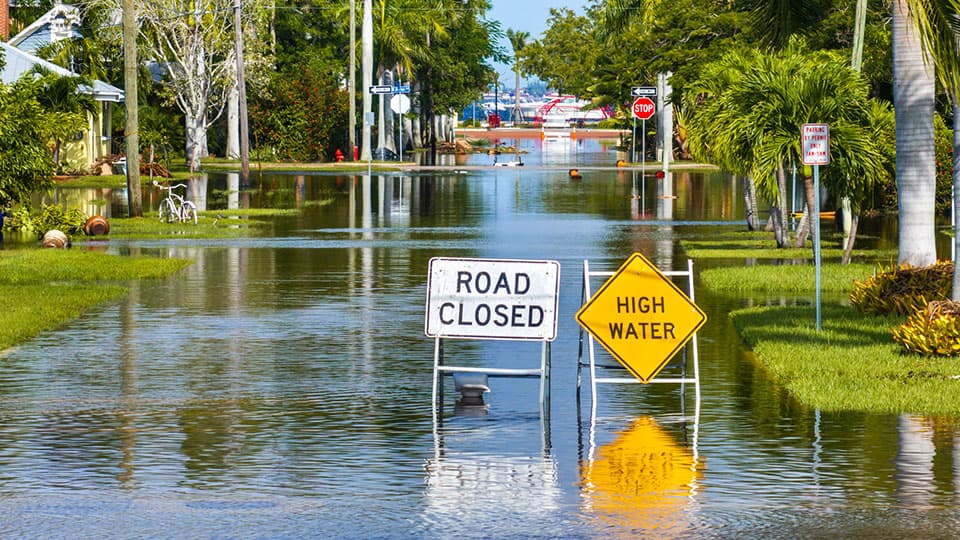
Floods are becoming a more frequent phenomenon worldwide. The United Nations Office of Disaster Risk Reduction (2025) identified an increase in flood-related disasters by 134% since 2000, reporting continuous high levels of people being affected through exposure to flood hazards, economic losses and infrastructural damage. The changing landscape is undeniable, with profound impacts on the communities living in flood-prone areas.
The impacts of flooding, however, are not only experienced through a single event or damage to the property or physical infrastructure that needs to be recovered. For many communities, flooding is a repeated experience, that affects their everyday life, including mobility, homes, work, education, and relationships.
Whilst many areas experience some level of support from municipal authorities and aid organisations, living with recurring events also means individuals and communities develop ways of coping and adapting. They learn how to organise and navigate their everyday lives, how to prepare, who to reach out to, and who to rely on for support in their local networks.
Traditionally villages in cyclone-prone regions such as Nadi, in Fiji, would meet to discuss and plan for the cyclone season, identify roles, designate responsibilities, and coordinate responses. They would build seawalls, plant mangroves, organise evacuation centres, mobilise youth groups, religious organisations and NGOs, work with government and health services, and respond collectively when floods occur. Indigenous knowledges such as reading of the moon or the birds, would be used to notice and predict the rainfall.
Yet, one resident noted: “Before, you could tell when the floods are coming in. Now, unexpectedly it happens, outside of the season…people do not have enough time to prepare themselves, accidents happen.”
These communities do not lack knowledge or ways to prepare for a flood. But increasing unpredictability around timing and intensity of the events alongside threatened transmission of traditional ecological knowledge means there is a growing gap between what people learned to expect and what environment is doing.
In Bangladesh, we encountered a different question: what happens when there is no ‘bouncing back’ to normal after a flood? The stories told to us by young people, many of whom were displaced due to flooding, captured how flooding, displacement, and environmental change slowly erode the familiar places and practices through which people learn to live with water.
Polluted and unsafe ponds, disappearing trees, green spaces and playing fields meant that opportunities to develop skills such as swimming were fading for young people, while shared public spaces for gathering, playing, and knowledge exchange became harder to access.
As they observed the degradation of the places they continue to inhabit, young people also talked about carrying memories of the skills and capacities developed by older generations through everyday life, memories passed on to them through stories of skills that they themselves can no longer practice.
This raises a question about preparedness. If the conditions in which people have learned to live with water are changing, how can we prepare for the future that we cannot fully anticipate? The idea is that responses that help us cope, but do not take into account the changing environment, may lead to narrowing the possibilities available in the future. Preparedness then is not applying what has worked before, but requires opportunities to question, reflect on, adapt, and rework how we respond to conditions which are in flux.
Living with water then is living with uncertainty. Our ongoing research addresses this by asking, how can we create spaces where people can draw on experiences, imagine possible futures and experiment with how they might respond together otherwise?
We explored this question through the development of a digital storytelling and play methodology: Stories to Share, Stories To Act, and Stories to Reflect, working with sport-based organisations, NGOs and community organisations, in flood-prone regions that already offer social space where young people and their communities come together. Storytelling allowed to bring different forms of knowledge into the room, and play created a space where scenarios were simulated, tried, experimented with, failed and learned from. This was not about practicing a response to a known situation but learning to collectively respond to uncertainty that may arise from living with water.
In the UK, Environment Agency recorded that about six millions properties in England live at risk of flooding, with risks continuing to grow as climate changes. This means that there will be more people living with water, and with the uncertainty that comes with it. At the same time an estimate of two million people, are unaware that their properties are at risk of flooding.
Current guidance encourages people to check the government website, to find out whether they are at risk, sign up to flood warning, and develop a flood plan. Yet preparedness cannot stop at informing people. If preparedness is ongoing, anticipatory, and collective, then people need more spaces where they share, plan, and practice various collective responses.
Dr Ksenija Kuzmina is a Senior Lecturer, Institute for Creative Futures, and Dr Holly Collison-Randall is an anthropologist in the field of Sport for Development and Peace.