EXPERT COMMENT: Europe risks ‘sleepwalking’ into war with Russia, warns security expert

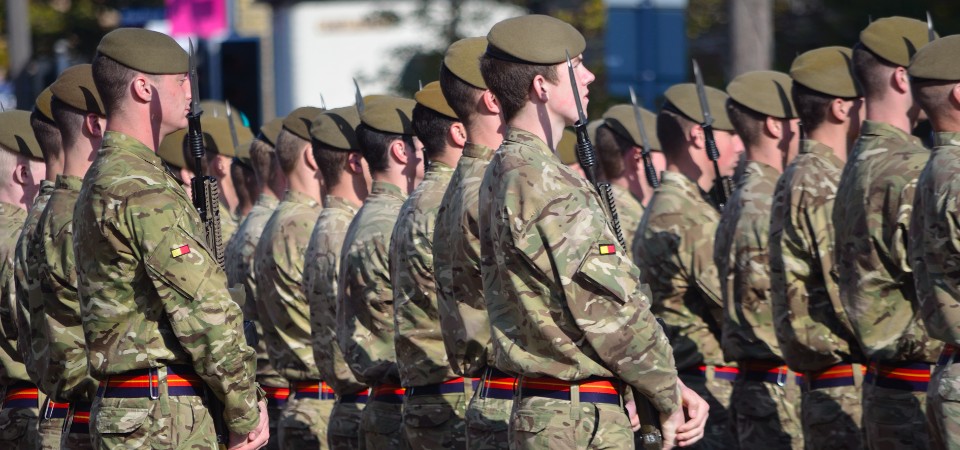
Soldiers line up on parade

Key Points

  • European leaders risk repeating the mistakes that led to the First World War by allowing fear to drive defence policy
  • Questions remain over Russia’s ability and intention to attack NATO countries
  • Increasing military spending could place enormous pressure on European economies and public services
  • Europe must address the risk of nuclear escalation alongside conventional military threats

Europe risks sleepwalking into a catastrophic war with Russia unless its leaders replace fear-driven military planning with a realistic assessment of the threat, a Loughborough University security expert has warned.

Dr Afzal Ashraf, a Visiting Fellow at Loughborough University and former RAF officer, says discussions at the Warsaw Security Forum revealed growing anxiety about a possible Russian attack on NATO countries.

In a new analysis, he draws parallels with the events leading to the First World War, when European governments increased military preparations amid fears that conflict was inevitable.

Dr Ashraf says that while Russia poses a genuine security threat, European leaders must distinguish between its ambitions, military capabilities and actual intentions.

He highlights conflicting intelligence assessments, with some military commanders warning Russia could attack NATO by 2029, while Danish intelligence considers a full-scale invasion unlikely.

He also questions whether Russia, having struggled to achieve its objectives in Ukraine after more than four years of fighting, currently possesses the capability to mount a major offensive against NATO.

The financial consequences of European rearmament are another major concern, says Dr Ashraf.

European military spending reached a record $563 billion last year, yet significant gaps remain in personnel, equipment, ammunition and air defence.

He added that further increases could put pressure on public services and undermine economic stability.

Dr Afzal Ashraf is a Visiting Fellow at Loughborough University. He served for 30 years in the Royal Air Force and has held national security and intelligence roles.

ENDS

Press Release Reference: 26/236

Loughborough is one of the country’s leading universities, with an international reputation for research that matters, excellence in teaching, strong links with industry, and unrivalled achievement in sport and its underpinning academic disciplines.

It has been awarded five stars in the independent QS Stars university rating scheme and named the best university in the world for sports-related subjects in the 2026 QS World University Rankings – the tenth-year running.

Loughborough has been ranked eighth in the Complete University Guide 2027 – out of 130 institutions. The achievement means Loughborough remains among a select group of universities that have maintained a top 10 position for more than 10 consecutive years, alongside Oxford, Cambridge, the London School of Economics, St Andrews, Durham and Imperial.

The University also ranked 9th in the Guardian University Guide 2027, out of 123 institutions nationwide and was named University of the Year for Sport in the Times and Sunday Times Good University Guide 2025 - the fourth time it has been awarded the prestigious title.

In the Research Excellence Framework (REF) 2021 over 90% of its research was rated as ‘world-leading’ or ‘internationally-excellent’. In recognition of its contribution to the sector, Loughborough has been awarded eight Queen Elizabeth Prizes for Higher and Further Education.

The Loughborough University London campus is based on the Queen Elizabeth Olympic Park and offers postgraduate and executive-level education, as well as research and enterprise opportunities. It is home to influential thought leaders, pioneering researchers and creative innovators who provide students with the highest quality of teaching and the very latest in modern thinking.