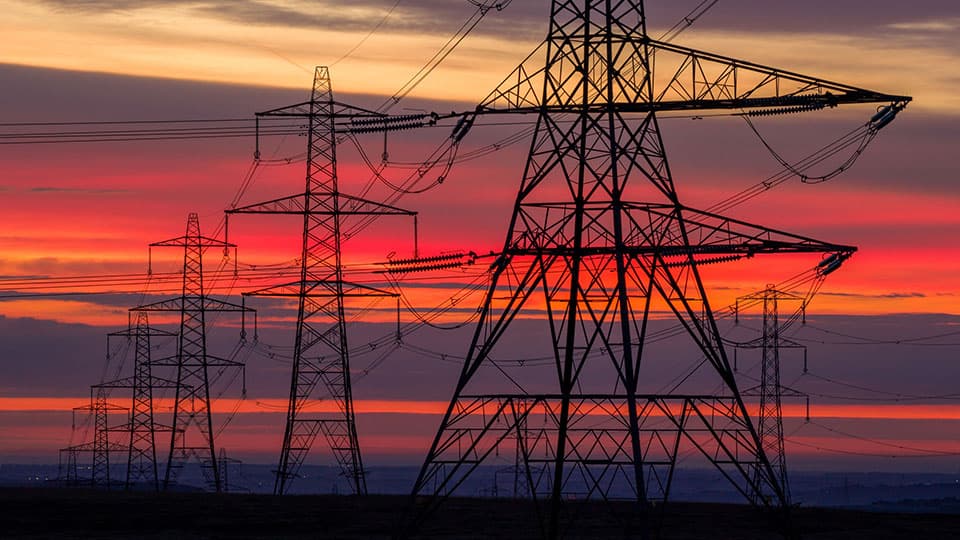
Professor Jairo Quirós-Tortós, Professor of Sustainable Transitions at Loughborough University’s STEER Centre and Chief Technical Officer of the Green Grids Initiative (GGI), has explained that there is no clean energy transition without the grids to deliver it.
He said: "While much of COP31 has focused on renewables and electrification, it has highlighted the missing link: the wires that connect them.
"Around the world, more than 1,500 GW of renewable projects are waiting in grid connection queues. In Latin America and the Caribbean alone, curtailed clean power cost around USD 7 billion in 2024.
"What separates countries that deliver is rarely one individual thing. It’s a system around it: planning, regulation, finance, permitting and innovation. And linking these with the people that will live with them is as critical."
At a GGI Ministerial Roundtable backed by the UK Government, the COP31 Presidency, IRENA and the UNFCCC, Jairo helped launch the GGI Technical Assistance Solutions Hub. The Hub connects governments, regulators, utilities and system operators with more than 30 expert partners, including Loughborough University, to plan, optimise and invest in modern grids.
He added: "Countries don’t lack ambition. They need support to deliver. That’s exactly what the Hub is for: matching country needs with the right expertise and staying with them through to implementation.
"We’re heading for 35% electrification by 2035 and tripled renewables by 2030. Yet more than 80 million km of grid must be added or replaced by 2040, and around 1,500 GW of renewable projects are stuck in connection queues. Every electron has to flow through a grid."
Throughout the week at COP31, Jairo has led a technical deep dive and spoken at events convened by the COP31 Presidency, the Brazil Pavilion and the COP31 Business Forum, presenting progress of the Coordinating Council for the Acceleration of Expansion and Resilience of Grids.
On Saturday, Jairo will join IRENA’s session Building the new power system: solutions and practices in grids, hydropower and storage. He will discuss the role of flexibility in integrating growing shares of renewable power: how grid optimisation can unlock capacity while new lines are built, how hydropower and battery storage can complement each other, and how regulation and climate finance can reward the services that keep power systems secure and resilient.
ENDS
Keep up-to-date with all of our COP31 activity at our dedicated hub.