Could Viktor Orbán be back in 2030? Why Péter Magyar has a fight on his hands after landslide win

Conversation
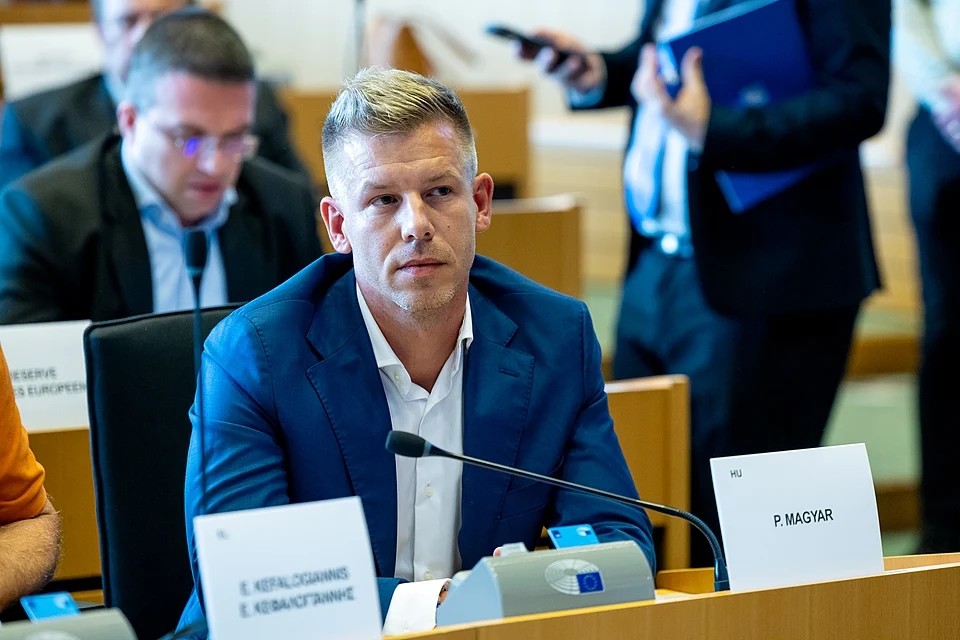
Newly elected Hungarian President, Péter Magyar.

Newly elected Hungarian President, Péter Magyar. Credit: Mr Silesian, CC0, via Wikimedia Commons

The mood was jubilant among liberals and pro-Europeans in Hungary and beyond on April 13 as Péter Magyar led the Tisza party to a landslide election victory. His win ended the 16-year administration of Viktor Orbán’s pro-Russian Fidesz party. Given the high turnout and margin of victory, giving Tisza a two-thirds constitutional majority in parliament, the jubilant mood seems justified.

However, defeating Orbán will be a long-term project. While several centrist politicians around the world have successfully unseated governing far-right populists in recent years, fewer have been successful in keeping them at bay long term. Poland’s Donald Tusk and Joe Biden in the US are probably the most obvious examples of this struggle.

A major challenge for Magyar will be to undo the system Orbán has put in place over the past 16 years to exercise control over the country. A key component of that system is Fidesz’s extensive control over the media.

Research I have carried out alongside colleagues shows that, despite a semblance of pluralism, most Hungarian media outlets are now controlled by people close to Fidesz. The pro-Fidesz Central European Press and Media Foundation (Kesma) plays a particularly central role, controlling more than 500 national and local media outlets.

Here, the experience of Poland is informative. When Tusk’s centre-right Civic Coalition replaced the populist, right-wing Law and Justice (PiS) party as Poland’s governing coalition in December 2023, one of the first actions of the new government was to try and depoliticise public media.

In eight years of PiS government, Polish state media was accused of promoting the party’s policies and launched personal attacks on opposition figures, including Tusk. During a campaign rally months ahead of the election, Tusk said: “We will need exactly 24 hours to turn the PiS TV back into public TV. Take my word for it.”

Continues…

The Conversation logo

For the full article by Professor Gerhard Schnyder visit the Conversation.

ENDS

Notes for editors

Press release reference number: 26/75

reputation for research that matters, excellence in teaching, strong links with industry, and unrivalled achievement in sport and its underpinning academic disciplines.

It has been awarded five stars in the independent QS Stars university rating scheme and named the best university in the world for sports-related subjects in the 2026 QS World University Rankings – the tenth year running.

Loughborough has been ranked seventh in the Complete University Guide 2026 – out of 130 institutions. This milestone marks a decade in the top ten for Loughborough – a feat shared only by the universities of Oxford, Cambridge, LSE, St Andrews, Durham and Imperial.

Loughborough was also named University of the Year for Sport in the Times and Sunday Times Good University Guide 2025 - the fourth time it has been awarded the prestigious title.

In the Research Excellence Framework (REF) 2021 over 90% of its research was rated as ‘world-leading’ or ‘internationally-excellent’. In recognition of its contribution to the sector, Loughborough has been awarded eight Queen Elizabeth Prizes for Higher and Further Education.

The Loughborough University London campus is based on the Queen Elizabeth Olympic Park and offers postgraduate and executive-level education, as well as research and enterprise opportunities. It is home to influential thought leaders, pioneering researchers and creative innovators who provide students with the highest quality of teaching and the very latest in modern thinking.