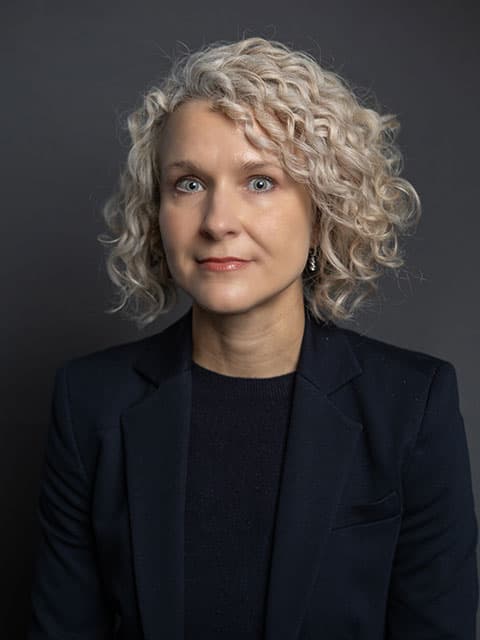
Dr Simona Rasciute is a Reader in Economics at Loughborough Business School.
Her research focuses on the application of advanced econometric and statistical modelling to large-scale administrative and survey datasets, with a particular emphasis on the social determinants of health and wellbeing. She has a longstanding interest in children’s and young people’s mental health, wellbeing and educational outcomes and much of her work examines how early-life circumstances shape long‑term opportunities.
Simona is currently a UKRI Policy Fellow and has been appointed to the Department for Education (DfE) to support the development of the evidence base for Children and Young People Achieving and Thriving. In this role, she works closely with government analysts and policy officials to strengthen the evidence underpinning national strategies to help every child “achieve and thrive”.
In 2023–24, Simona held a British Academy Innovation Fellowship, during which she was seconded to the Office for National Statistics (ONS). Her work at ONS focused on developing data infrastructure and statistical models to identify the key drivers of inequalities in children’s mental ill health across England.
At Loughborough, Simona teaches the following modules:
- Applied Econometrics
- Statistics for Economics
Simona received her PhD in Economics from Loughborough University in 2008. She completed her undergraduate degree in Economics at Vytautas Magnus University, Lithuania, followed by Master’s degrees in Banking and Finance (Vytautas Magnus University) and International Trade and European Integration (Free University of Brussels).
Throughout her academic career, Simona has investigated the following research questions and found that:
- Child mental ill health negatively affects education attainment directly and indirectly via school absences.
- There is a causal intergenerational transmission of both mother’s and father’s mental ill health on child mental ill health.
- Access to green space is positively linked to child mental health.
- There is a causal bi-directional feedback loop between school absences and child mental ill health, and it is mediated by various vulnerabilities.
- Some types of SEND support in school ‘buffers’ the effect of child mental ill health on school absences.
- Mental and general health have a causal effect on social capital, financial security and personal relationships.
- Parental (especially mother’s) education is strongly associated with the child’s mental health.
- Participation in cultural, sport, religious, civic and political group plays an important role in forming different types of social capital.
- Relational goods affect wellbeing and the relationship is mediated by instrumental versus relational disposition.
- Benefits of higher education extend to include experiential and social dimensions and not just earnings.
- Downward, P. and Rasciute, S. (forthcoming). ‘No man is an island entire of itself’. The hidden effect of peers on physical activity, Social Science and Medicine.
- Downward, P., Greene, W. and Rasciute, S. (forthcoming). Do relational goods raise well-being: an econometric analysis, Eastern Economic Journal.
- Downward, P. and Rasciute, S. (2015). Assessing the impact of the National Cycle Network and physical activity lifestyle on cycling behaviour in England, Transportation Research Part A: Policy and Practice, 78: 425-437.
- Rasciute, S., Puckett, S., & Pentecost, E. J. (2015). The allocation of OECD direct investment between CEECs: A discrete choice approach. Bulletin of Economic Research, 67 (S1), S26-S39.
- Rasciute, S., Pentecost, E., and Ferrett, B. (2014). Firm heterogeneity in modelling foreign direct investment location decisions. Applied Economics, 46(12): 1350-1360.