Loughborough has an outstanding reputation for student experience and community.
I think a part of this is because it offers a range of opportunities for you to develop transferable or soft skills. For example, participating in academic representation – such as serving as a course representative – is the chance to work closely with staff and advocate for other students.
Beyond your studies, the campus atmosphere is vibrant with plenty of opportunities to connect with people across sports, societies and volunteering. If you have an idea for an event, charity or new society, you can present it to the Students’ Union and ask for help to make your dream come true!
I was particularly drawn to my degree programme's flexibility. Rather than focusing on one of its three aspects per year, it offers the opportunity to focus on the intersections between politics, philosophy and economics which is where my interest lies.
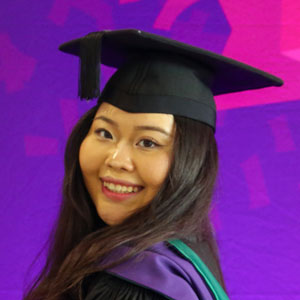
I really enjoy engaging with moral philosophy, ethics and political theory. These topics push me to think more about justice and responsibility across society – and is the area my dissertation explored.
However, my favourite module was Political Simulation. This second-year option draws on the concepts of social contract theory and the state of nature. For the final assessment, you’re split into groups and conduct a four-hour simulation that tries to create a society in agreement.
For my dissertation, I focused on the Rwanda Plan introduced by the UK Government in 2022. It aimed to relocate irregular migrants to Rwanda while their asylum claims are processed.
I chose this because migration has been at the heart of many political debates. As someone with an immigrant background, the policy resonated with me personally.
Still, I saw a gap in the research. While much has been written about the legal and ethical critiques of the policy, less attention has been paid to the narratives and justifications for it. My dissertation contributes to the broader discussion around migration policies and the use of political narratives.
Throughout my degree, the teaching was very engaging and supportive. All my lecturers were approachable and encouraged independent thought. I really appreciated the balance between structured teaching and space to develop my own arguments – such as the back-and-forth philosophical debates during seminars.
There are plenty of study spaces around the campus, but my favourites were our Department building and Wavy Top. Both have bookable rooms, perfect for individual study or group discussions.
Although I didn't undertake a formal placement year, I did complete a micro-internship and summer internships. The Loughborough Careers Network offers the micro-internship – a 50-hour fully paid internship, open only to Loughborough students.
Alongside this, I actively engaged in cross-cultural academic and social experiences through societies and the academic representation team. For example, the Higher Education Young Talent Alliance Conference provided a unique opportunity to connect with students from different UK and Chinese universities to exchange thoughts and ideas.
My studies have prepared me for my future career in many ways.
One of the concepts I drew on most during my internships was conceptual analysis. My PPE training equipped me with the ability to deconstruct, reconstruct and interpret an argument from different perspectives.
This skill proved invaluable when evaluating a project and presenting my idea clearly in a professional setting – and will serve me well over the coming years.
My advice to anyone thinking of studying here is - take full advantage of the support from lecturers and staff. They are genuinely invested in your success. Use their office hours throughout the year. Don't wait until the week before your assignment is due or you sit your exams to seek help.