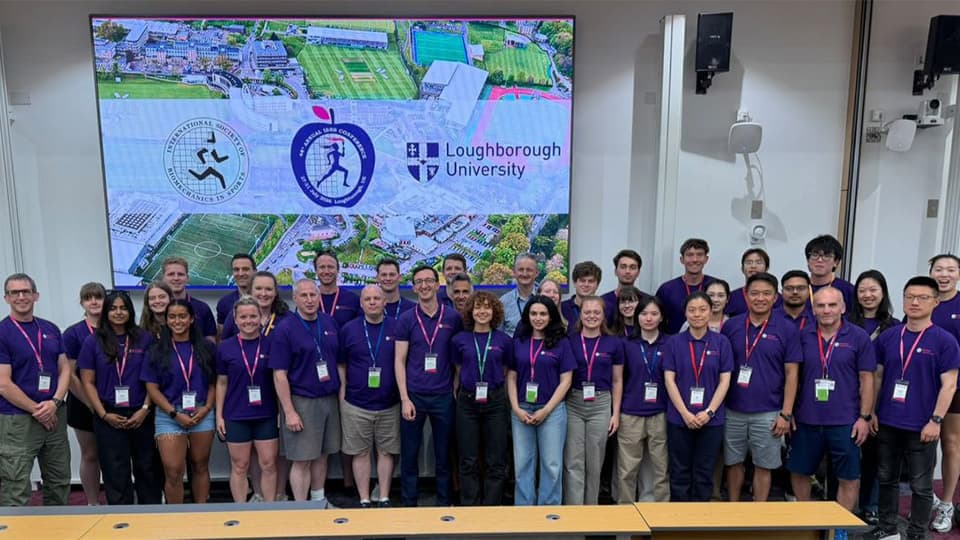
With 609 delegates and 388 peer-reviewed presentations, ISBS 2026 was the largest conference in the society’s history, bringing together researchers, practitioners, educators and students to share the latest developments in sports biomechanics.
The conference programme featured keynote lectures, applied sessions and a week-long social programme designed to strengthen collaboration between academia and professional practice. New initiatives introduced for 2026 included the ISBS Coach Outreach Initiative, a Developing Nations discount scheme, and the launch of a new Human-Equipment Interaction Sports Engineering Award. For the first time in the conference’s history, all accepted abstracts will be individually published in a supplementary issue of the Sports Biomechanics journal. The conference was chaired by Dr Stuart McErlain-Naylor and co-chaired by Professor Matt Pain and Dr Glen Blenkinsop, supported by an organising committee of colleagues from the School of Sport, Exercise and Health Sciences and the Sports Technology Institute.
Hosted on Loughborough’s campus, the event reflected the conference theme of bridging the gap between research and applied practice. Delegates had the opportunity to engage in hands-on sessions across a range of sports and performance environments. Applied session topics included athletics, delivered by UK Athletics on the track at the High Performance Athletics Centre; badminton; concussion, featuring an overview of the Vestibular/Ocular Motor Screening assessment; cricket injuries, comprising a panel discussion with insights from England, Australia and India; cricket performance, held in partnership with the England and Wales Cricket Board; golf, at the PING Performance Research Centre; gymnastics, which was explored through a panel discussion on the coaching-biomechanics interface; para sport, held at the Centre for Para and Disability Sport Innovation; running; swimming, delivered by Aquatics GB at the Swimming Pool; tennis; and a panel discussion by practitioners from the UK Sports Institute on “Insights from elite sport: turning measurement into meaningful performance impact”.
Activities also included a student mentor breakfast and a banquet at the home of Leicester Tigers, one of Europe’s most famous rugby union clubs. Enriching social trips were held on day four, with visits to Woolsthorpe Manor (home of Sir Isaac Newton), Nottingham Castle, the Great Central Railway, National Space Centre, Jump Giants Trampoline Park, and a Nottingham city visit.
ISBS 2026 also formed part of a year-long celebration marking 50 years of sport and exercise science education at Loughborough University as well as 60 years since Loughborough received its Royal Charter and became the first technological university in England. With a long-standing involvement in ISBS, boasting multiple board members, award winners, and ISBS Fellows, Loughborough University is deeply committed to the advancement of sports biomechanics. The event also featured an awards evening that recognised emerging researchers and innovative contributions to the field. Among them was the Geoffrey Dyson Award, the most prestigious honour presented by ISBS, named after former Loughborough lecturer Geoffrey Dyson.