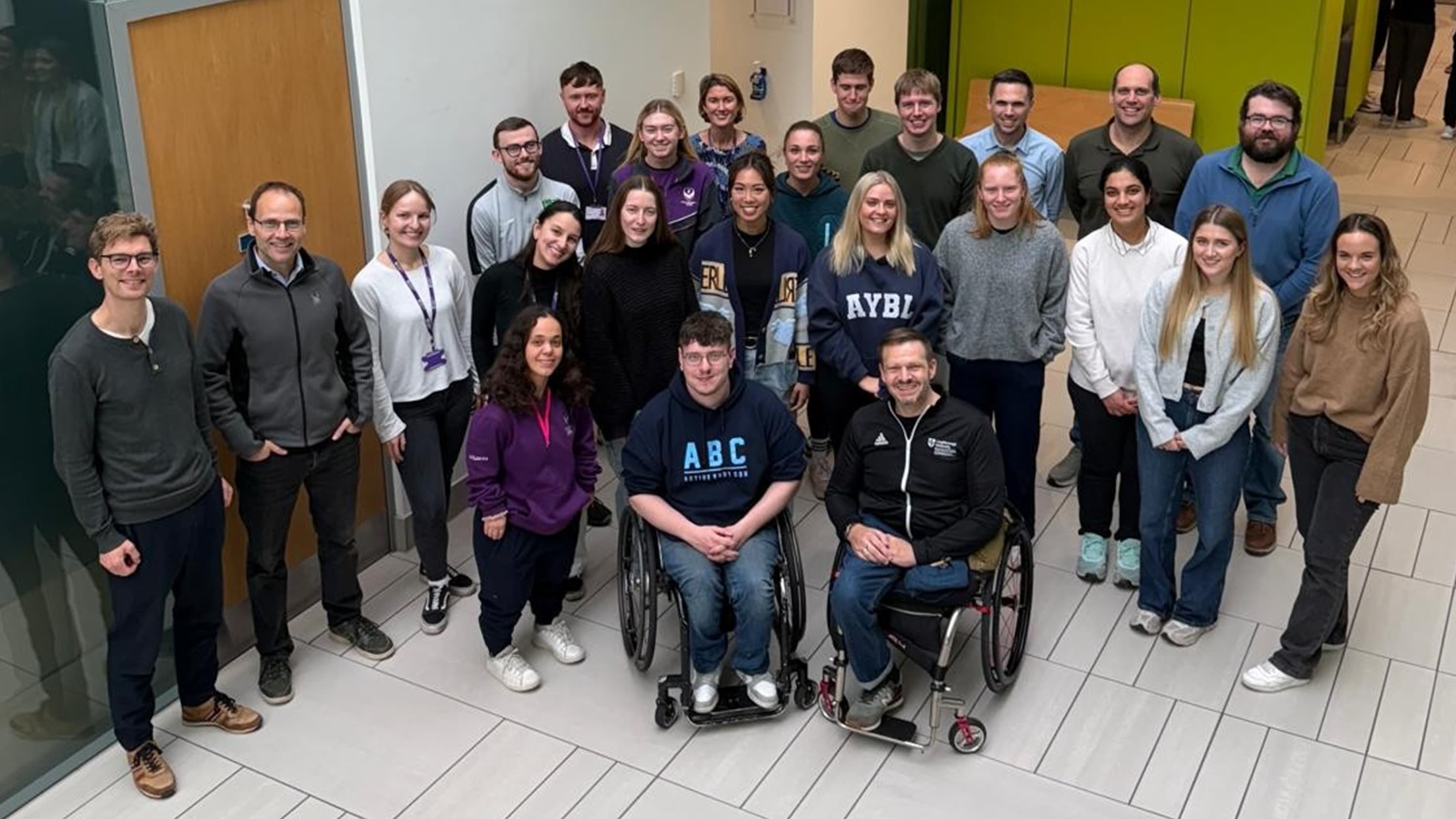
At the start of October, we welcomed seven new doctoral researchers, Hannah Lonsdale, Natalia Moura, Zoe Palmer, Sarah Schonenberg, Aphra Sutherland-Howard, Cheyenne Cheung and Liam Readle, with each researcher addressing key challenges and opportunities from across the Para sport landscape to provide crucial impact for Brisbane 2032.
To begin their journey, the researchers completed a lab induction at the Peter Harrison Laboratory, followed by a formal lunch, providing the opportunity to get to know their fellow PHC members and begin building connections across the Centre’s research community.
In November, the cohort took part in the first ParaFit Cluster Development Day, organised by Dr Tom Paulson. The programme featured contributions from Dr Michael Hutchinson (International Paralympic Committee [IPC]) and Dr Thomas Rietveld (Visiting Fellow), who played key roles in facilitating discussions around Para classification and research innovation at Loughborough University.
Michael Hutchinson offered insights from his new role as Head of Classification at the IPC in Bonn, emphasising the importance of early introduction for the doctoral researchers to the principles and challenges of classification in Para sport.
Meanwhile, Thomas Rietveld reflected on his journey from PhD student to Research Associate, sharing practical lessons related to data collection, analysis, and navigating the challenges of doctoral research.
New Cluster student Aphra Sutherland-Howard reflected on the day, commenting:
It was great to hear from Mike and Thomas, providing insight on two very different career pathways post PhD. Having the whole cluster group together also made discussions really interesting, hearing the different perspectives from across schools.
The formation of this new doctoral cluster marks an exciting step in the University’s contribution to Para and disability sport research. We would like to say a huge thank you to everyone who has supported the formation of the new cluster and for those who welcomed them into the PHC community. The future of Para sport research at Loughborough University looks very bright.