Working with national governments, it aims to improve thousands of lives by reducing reliance on polluting fuels such as firewood and charcoal.
Implemented through the FCDO-funded MECS programme and funded by the British High Commissions in both countries, the multi-million-pound ‘Modern Cooking Demonstrators’ are supporting thousands of households and hundreds of schools to make the switch to electric cooking (eCooking).
Globally, an estimated 2 billion people still rely on polluting fuels for cooking, generating harmful household air pollution responsible for an estimated 2.9m premature deaths per year – more than malaria, tuberculosis, and HIV/AIDS combined.
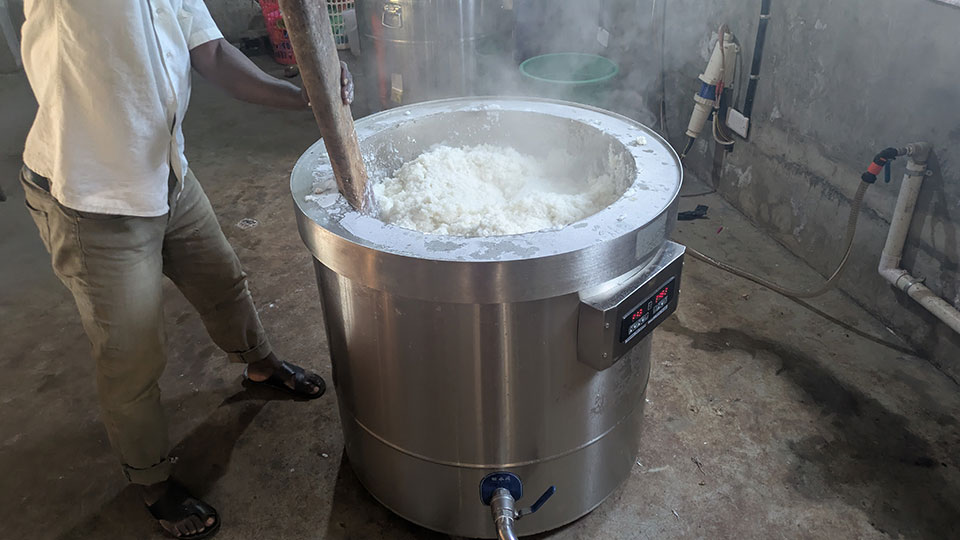
Transitioning school kitchens to eCooking is a major component of both demonstrators. Across Tanzania and Uganda, schools often rely on large quantities of firewood and charcoal to prepare daily meals for hundreds or thousands of pupils. This can impose considerable financial costs on schools, expose cooks and pupils to harmful smoke, and contribute to deforestation and greenhouse gas emissions.
In Phase 1, 36 schools in Tanzania and 110 in Uganda are being supported to transition to electric cooking. Across the participating schools in Tanzania, over 13,000 pupils receive school meals.
Transitioning school kitchens to eCooking can deliver multiple health, environmental, social and economic benefits to large numbers of people, including reducing biomass use and exposure to harmful smoke, potentially reducing schools' cooking expenditure, and raising awareness of the benefits of electric cooking among pupils, parents and wider communities.
Schools offer particular opportunities for scaling up eCooking, with relatively simple and consistent menus, large numbers of pupils to feed, and cooking schedules that often fall outside peak electricity demand hours. As school kitchens can consume large quantities of firewood, transitioning a single institution to eCooking can substantially reduce biomass fuel consumption and deliver associated benefits.
The Demonstrators are helping schools switch to electric cooking through new appliances, kitchen upgrades and training for cooks, while building partnerships and developing new approaches to making the transition affordable.
Kibasila Primary School in Dar es Salaam was selected as the first model school for Tanzania's school eCooking programme. Its kitchen underwent a comprehensive refurbishment, including the installation of four electric pressure cookers, electrical and water infrastructure upgrades, and improvements to the kitchen environment.
The transition to electric cooking in the school has delivered substantial benefits, including:
- Approximately 40% reduction in daily energy costs, with electricity for cooking and other school needs now costing approximately TZS 10,000–12,000 per day, compared with TZS 20,000 previously spent on firewood alone. Savings have been redirected towards purchasing more food.
- Cooking times reduced by approximately 55%, with the daily cooking cycle shortened from around 5.5 hours to 2.5 hours, helping ensure meals are served on time.
- More than 450 pupils now fed daily, compared with approximately 340 previously, with school management attributing the increase to improvements in kitchen reliability and performance.
- Improved working conditions and wellbeing for school cooks, who previously cooked outdoors over firewood fires, exposed to smoke, heat and rain, but now work indoors in a refurbished electric kitchen.
Both demonstrators entered their second phases in 2026, with work underway to develop new approaches to scaling up school eCooking, including a proposed revolving Schools Trust Fund in Tanzania, and work on more affordable electricity tariffs and carbon financing in Uganda.
The MECS programme has also been acknowledged at a number of high-level events at the current COP31 conference in Turkey, being referenced by the Tanzanian government and representatives from the Foreign, Commonwealth, and Development Office (FCDO).
More information on the MECS programme and the Modern Cooking Demonstrators in Tanzania and Uganda is available here.
Keep up-to-date with all of our COP31 activity at our dedicated hub.