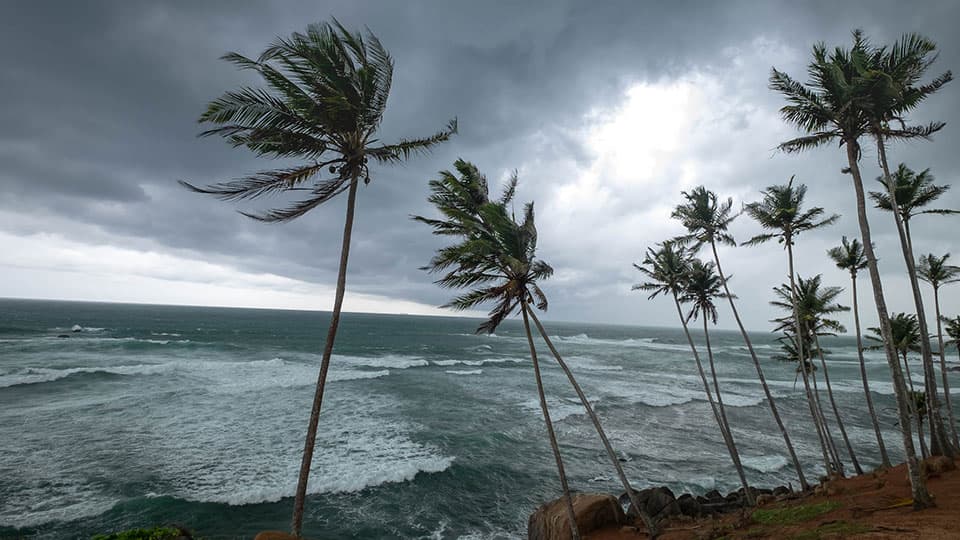
A new study led by Loughborough University experts found that over 600 people died and about 2.3 million people were affected by the event. More than 200,000 people were displaced, and many are still in temporary shelters following the cyclone. The disaster caused around US $4.1 billion in damage, which amounts to about 4% of Sri Lanka’s Gross Domestic Product (GDP).
Sri Lanka is highly exposed to natural hazards, with two monsoonal seasons bringing heavy rain, making it vulnerable to frequent flooding and landslides, and tropical cyclones, which cause high winds, excessive rainfall, and storm surges. The majority of the population are also located in low-lying, flood-prone areas, increasing the need for effective disaster-management planning.
Professor Dilanthi Amaratunga, a professor of Disaster Risks and Climate Resilience at Loughborough’s School of Architecture, Building and Civil Engineering, led the research and found that houses, roads, bridges, schools, hospitals, and farmland were among the infrastructure hit the most severely.
Approximately 2.3 million individuals were affected by the cyclone, representing about 10% of the total population, with vulnerable cohorts, including children, the elderly, and pregnant mothers, bearing the impact. The mortality toll was significant, and as per the country's Disaster Management Centre (DMC), the number of deaths due to the Cyclone rose to 643 as of 17th December 2025, with 183 people remaining missing.
The disaster also revealed major weaknesses in Sri Lanka’s preparedness for the scale of cyclone. Even though warnings were issued and evacuations happened, warnings were confusing, inconsistent, or issued in limited languages, and different agencies sent messages separately instead of one trusted source.
Local authorities had limited capability and many communities were cut off for days as a result, with 46 reservoirs also overflowing, worsening floods in the area.
Professor Amaratunga, who worked alongside her collaborators in Sri Lanka, stresses that Sri Lanka’s current early warning system is fragmented and not trusted enough by the communities it is designed to support. She argues that a single voice is needed for disaster warnings, alongside better communication in multiple languages, and clearer instructions for the public to follow in the event of a natural disaster of this scale.
The study, which was published in Progress in Disaster Science, also found that most rescues that were done during the cyclone were informal neighbour‑to‑neighbour efforts.
The authors further highlight under‑investment in prevention, with most money going towards recovery efforts instead, unplanned urban development in risky areas, and misinformation and fake videos during the cyclone adding confusion.
Professor Dilanthi Amaratunga added: “Despite the tragic circumstances surrounding Cyclone Ditwah, the aftermath offers Sri Lanka an opportunity to evaluate its vulnerabilities and calibrate its systems for improved future outcomes.”
The academics also make a number of recommendations for Sri Lanka’s disaster resilience off the back of this research.
They suggest that alongside a strong and multilingual multi-hazard early warning system, the aim should be reducing damage, not preventing all hazards as natural disasters, like Cyclone Ditwah, will keep happening.
They add that cities and local governments need funding and skills to enforce safe planning, with social media being used responsibly with consistent messaging.
The full research is available online here.