What brings urban spaces to life?
AI insights into social interaction and spatial dynamics
Wenjie Chen, Asya Natapov, Yasir Ali
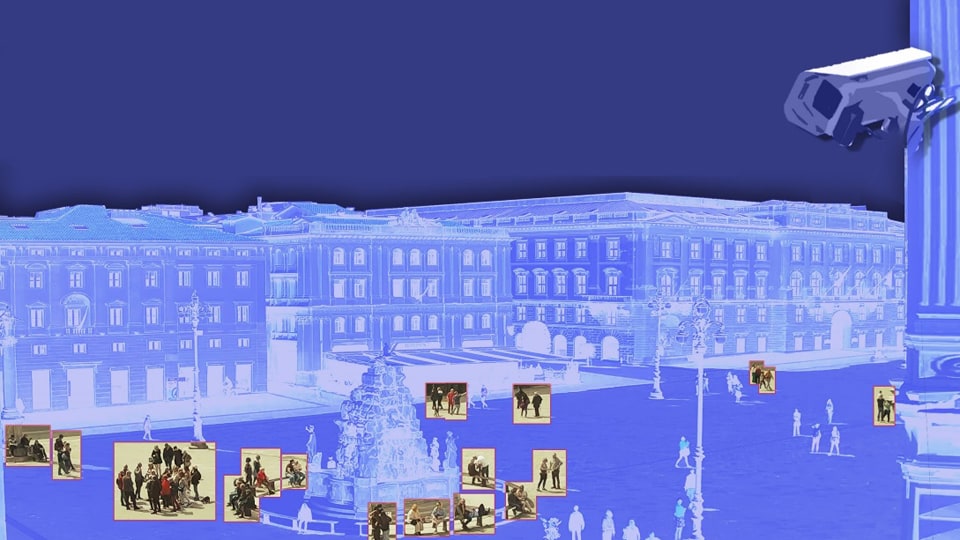
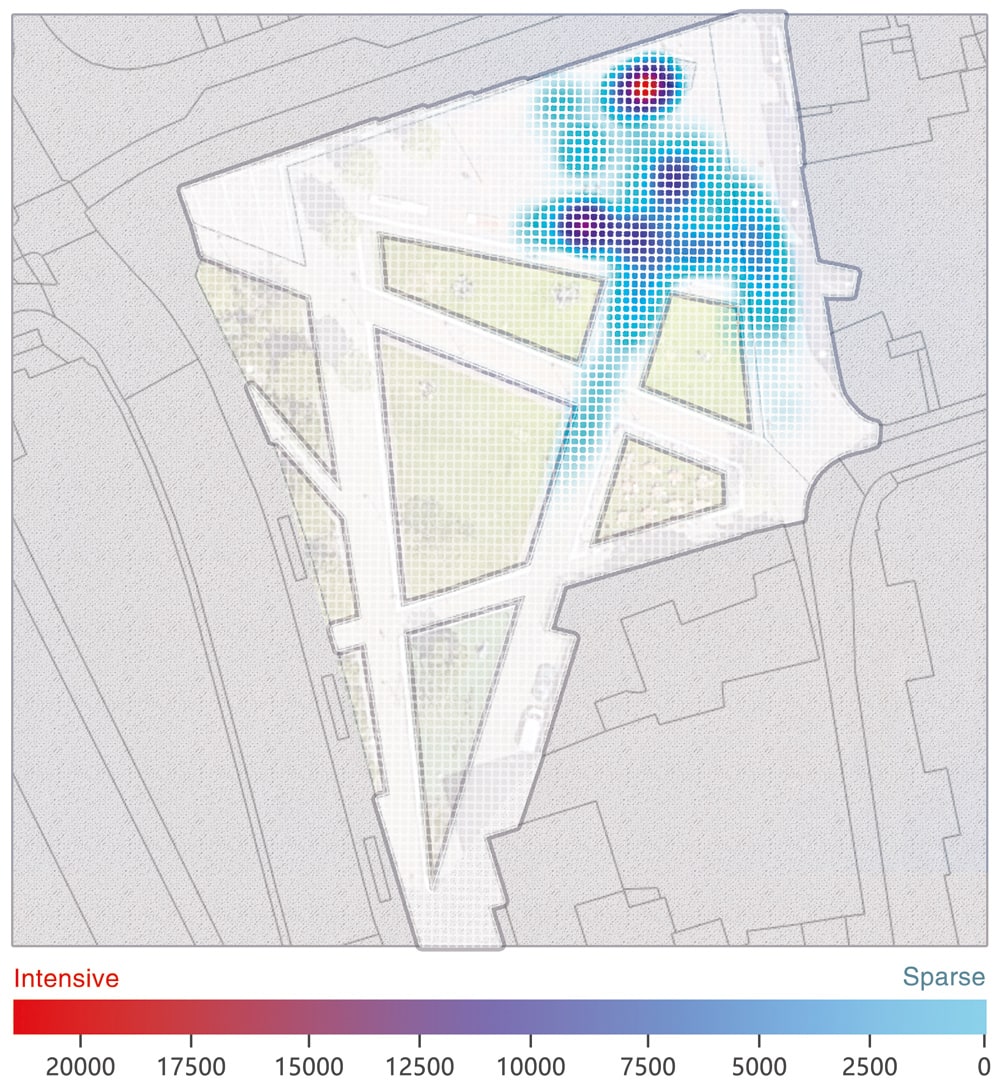
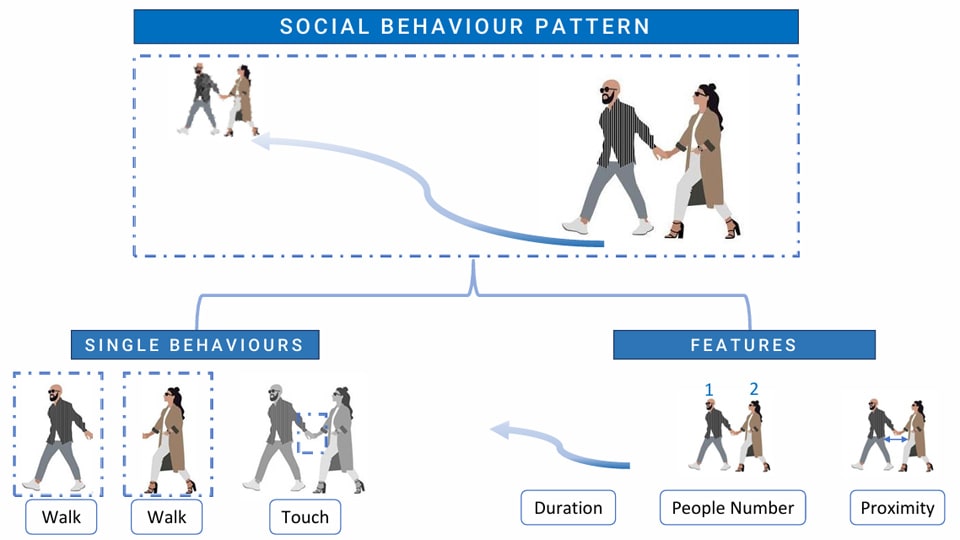
This project explores the flows and interactions of people in urban squares, where individuals meet, pause, and walk together—everyday moments that form the subtle pulse of urban vitality. Using computer vision and deep learning, the project transforms these scenes into analysable data. Models such as YOLOv7 are employed to detect and track pedestrians, quantifying social interaction features including distance, interaction duration, and group size. Building on this, the project develops the Social Interaction Intensity Index (SIII) to measure spatial vitality and reveal how interaction hotspots relate to seating areas, green spaces, and landmarks. The research spans sites in the UK, Milan, Valletta, and Petra, comparing pedestrian social behaviours across diverse cultural contexts and spatial typologies. It represents the first empirical test of the Social Wayfinding Theory from an urban planning perspective, demonstrating how social relationships subtly shape path choices and walking rhythms. Ultimately, the project uses technology to uncover the human stories embedded in the city.
Publications and presentations
- Can urban vitality be seen? Video analytics of social interaction and land use
- How vibrant is this space? Identifying pedestrian social interactions in urban space through computer vision
- Identify Pedestrian Social Interactions: A Computer Vision Approach to Social Interactions and Urban Vitality
- How vibrant is this space? Identifying pedestrian social interactions in urban space through computer vision