Leveraging passively generated big data
To model e-scooter routing considering spatial configuration
Hans-Heinrich Schumann, He Haitao, Asya Natapov, Mohammed Quddus
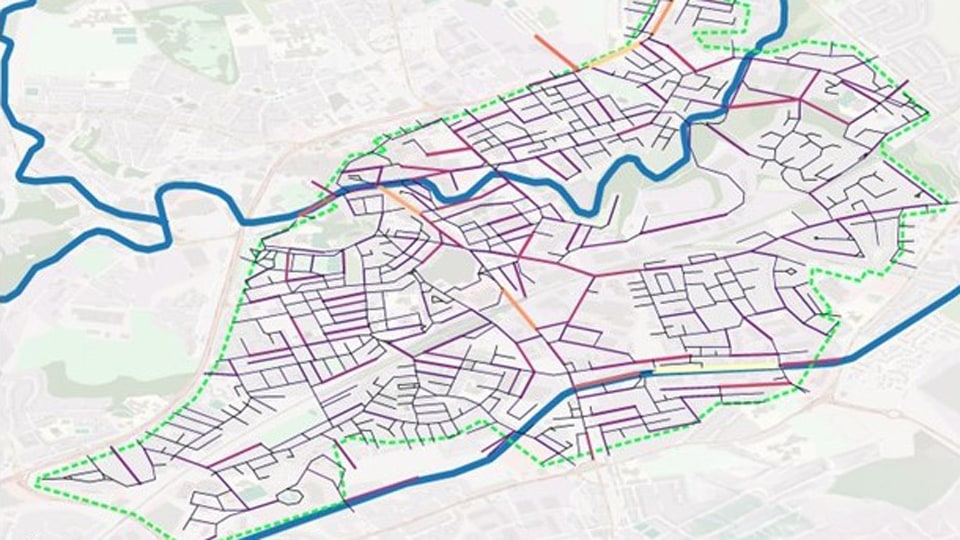
Understanding e-scooter riders’ behaviours as well as the appropriate utilisation of the rich data produced by the mode is a challenge, with negative implications for their successful integration in the transport and urban planning ecosystem. Linking the theory of natural movement with big data analytics, this project evaluates the impact of urban morphology, socio-demographic information, and infrastructure on e-scooter rider’s behaviour. Based on findings from three case study locations, the project demonstrates that urban morphology parameters to e-scooter flow and route choice models significantly improves their predictive power, analyses the time-dependent behaviour of e-scooter riders, and quantifies the multi-modal benefits of dedicated cycling infrastructure, finding that it reduces perceived e-scooter travel distance by at least 51%.


Publications and presentations
- The influence of spatial configuration on e-scooter traffic flows
- City-scale GPS data reveals impact of spatial configuration and dedicated infrastructure on e-scooter route choice
- Passively generated big data for micro-mobility: State-of-the-art and future research directions
- Comparative Analysis and Modelling of E-scooter Usage in Three Locations
- Exploiting Passively Generated Big Data for Micromobility Analysis and Planning: A Literature Review
- Applying space syntax to traffic volume models of micro-mobility