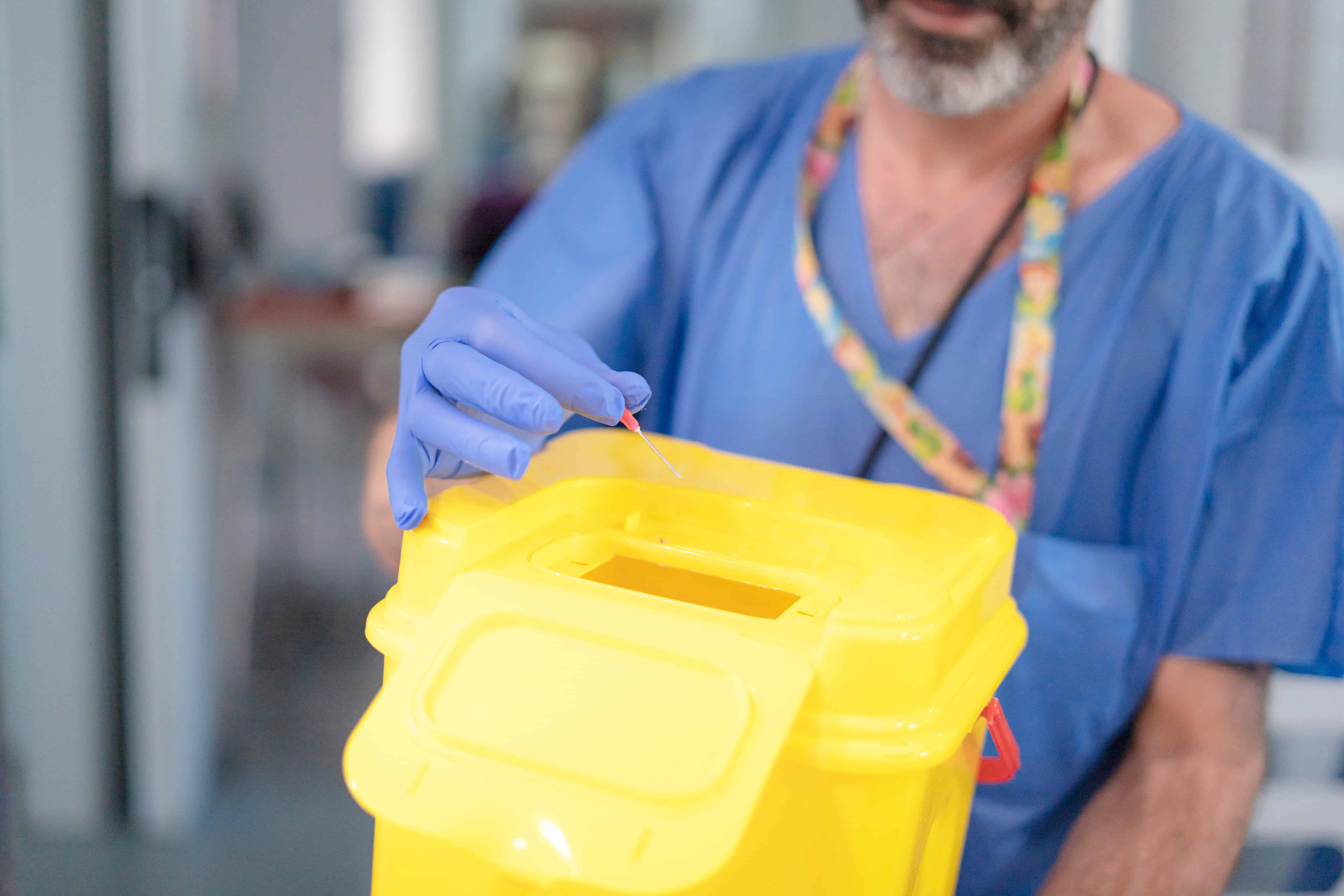
Injuries resulting from an unintended puncture by a needle – known as needlestick injuries – are common for workers who regularly handle sharps, such as those within medical and veterinary sectors. When a needlestick injury occurs during the preparation or administration of a liquid radioactive source, a fraction of the source is deposited under the skin, causing an accidental exposure to radiation.
While the biological risk posed by needlesticks is well researched, the exposure to ionizing radiation which occurs within a radioactive needlestick injury is poorly understood. In order to correctly manage the risk posed by radioactive needlesticks to employees and protect worker’s health, a strong evidence base detailing how much activity is deposited within needlestick injuries is required.
This project builds on Loughborough University research in dosimetry, to better understand the risk of radioactive needlesticks in a healthcare setting. This will provide employers with an evidenced-based method to manage staff radiation exposures and inform their decisions regarding staff classification, which may ultimately reduce health care services costs and help to safeguard the health of radiation workers.