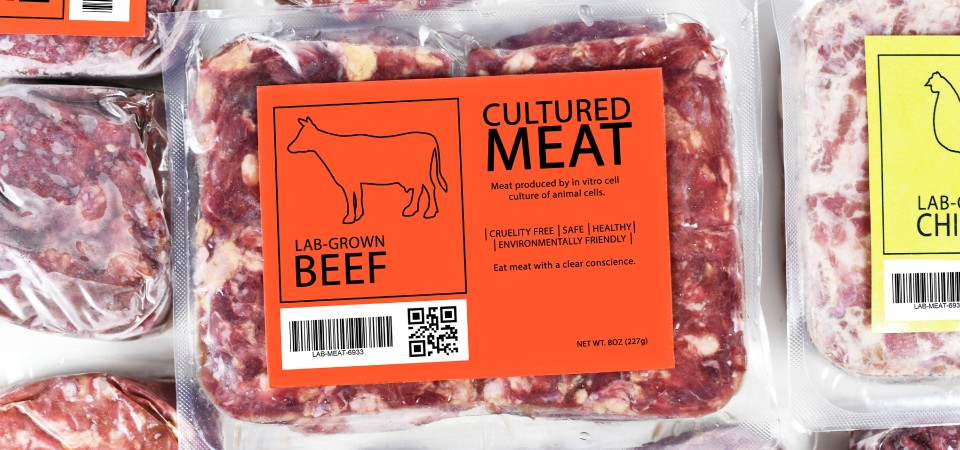
In a new paper, philosopher Dr Josh Milburn, of Loughborough University, argues that while a morally virtuous person would likely abstain from meat produced through conventional farming, they could still reasonably support or even eat “cultivated meat” – real meat grown from animal cells without killing animals.
Dr Milburn’s work challenges a common scepticism within virtue ethics, a branch of philosophy that focuses on moral character rather than rules or outcomes.
Virtue ethicists worried about human treatment of animals sometimes argue that there is a moral failure in constantly creating new ways to eat meat when we could just stop eating meat altogether.
However, Dr Milburn argues that this answer is too quick. “Cultivated” alternatives to animal products could be the answer to a number of issues created by animal farming.
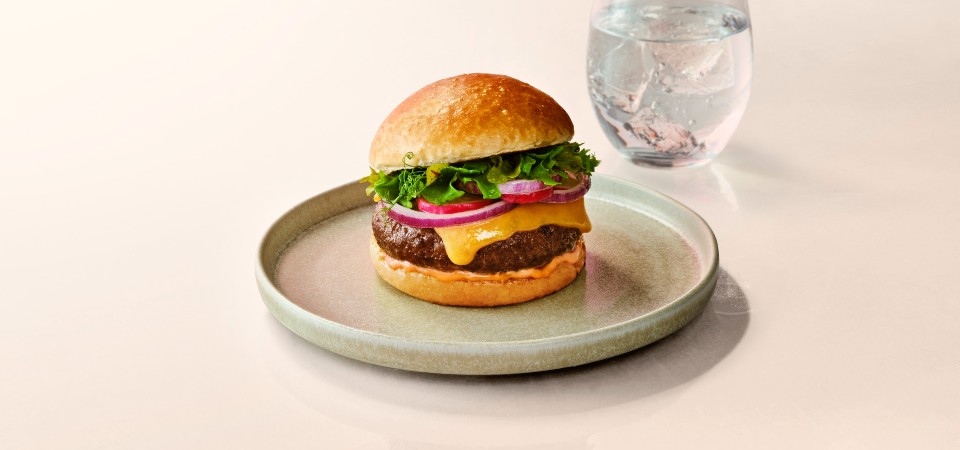 A cultivated beef burger by Mosa Meat. Image provided by Tim van de Rijdt
He said: “Animal agriculture as we currently know it is a disaster for animals, as well as the environment and public health. Yet despite decades of activism, we have made little collective progress towards fully plant-based diets.
“Cultivated meat and other forms of cellular agriculture may actually offer a realistic way out of that impasse.”
Cellular agriculture produces animal products at the cellular level rather than the organism level.
“Put simply,” said Dr Milburn, “why grow a whole chicken if all we actually want is the breast meat?
“In principle, cultivated meat could dramatically reduce the animal suffering, land use, carbon emissions and health risks associated with animal agriculture.”
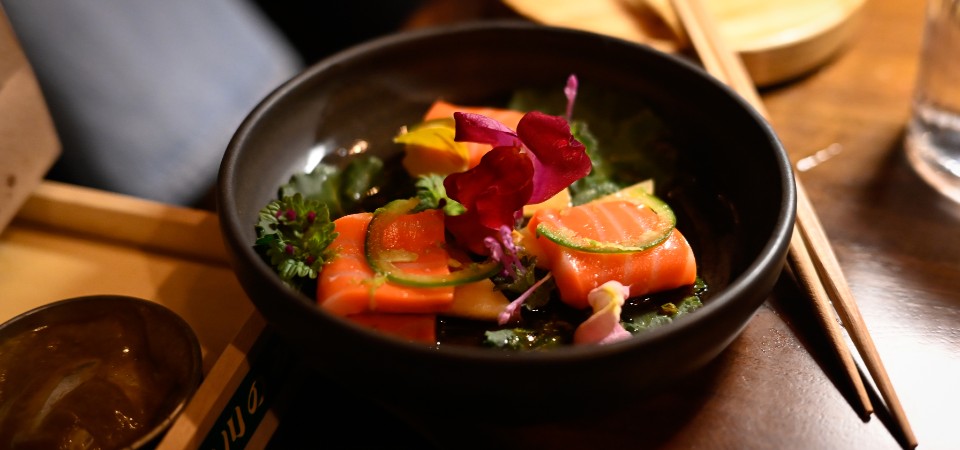 Wildtype cultivated seafood. Provided by Arye Elfenbein
The paper argues that several widely recognised virtues can support cultivated meat. A compassionate person, Dr Milburn suggests, should want to disentangle themselves from harmful farming systems.
He said that if cultivated meat can be produced without animal suffering, compassion would not count against eating it.
He added that an understanding person might also recognise that giving up meat is psychologically, socially and culturally difficult for many people.
In that context, cultivated meat could act as a stepping stone away from conventional meat, even if it is not the final ethical ideal.
“The paper doesn’t claim that cultivated meat is ethically perfect,” said Dr Milburn “nor that virtuous people must eat it.
“Questions remain around production methods, which might not fully respect animals, as well as our relationship with food. But for virtue ethicists, the ethical life involves recognizing a range of virtues, rather than following simple rules.”
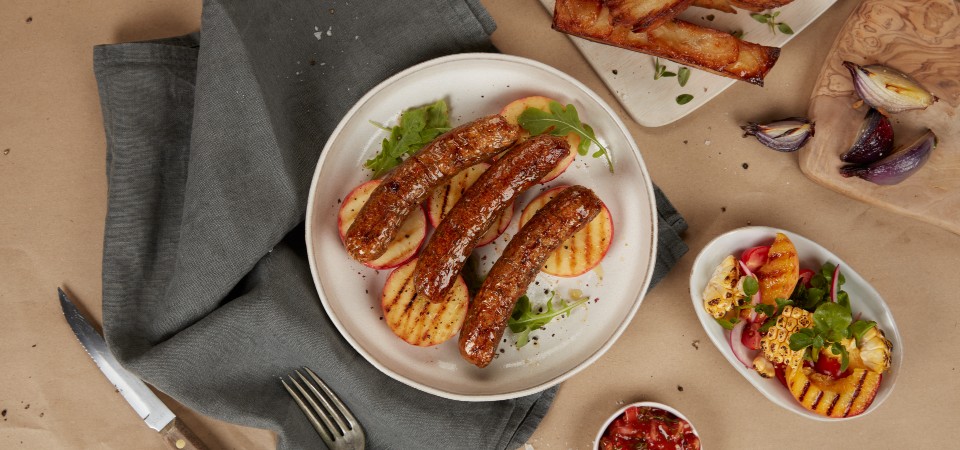 Cultivated sausages by Ivy Farm. Access & permission: CC-BY
Dr Milburn is now extending the work beyond food.
With colleagues at the University of Manchester, he has recently secured funding from the Cellular Agriculture Manufacturing Hub – supported by the Engineering and Physical Sciences Research Council – for a project exploring how cellular agriculture could be used to produce materials for the UK fashion industry, potentially reducing reliance on leather, silk and other animal-derived materials.
- The Virtues of Cultivated Meat has been published in the Journal of Agriculture and Environmental Ethics.
ENDS