Donald Trump is clearly in a hurry to dominate the political narrative in his second term of office. He began 2026 with strikes in Syria against Islamic State groups, the kidnapping of Venezuelan president Nicolás Maduro, threats to intervene in Iran and the declaration that the US would take control of Greenland – by hook or by crook.
Of all these the plan to add Greenland to the US either by negotiation or by force is easily the most controversial as it could lead to the break-up of the Nato alliance.
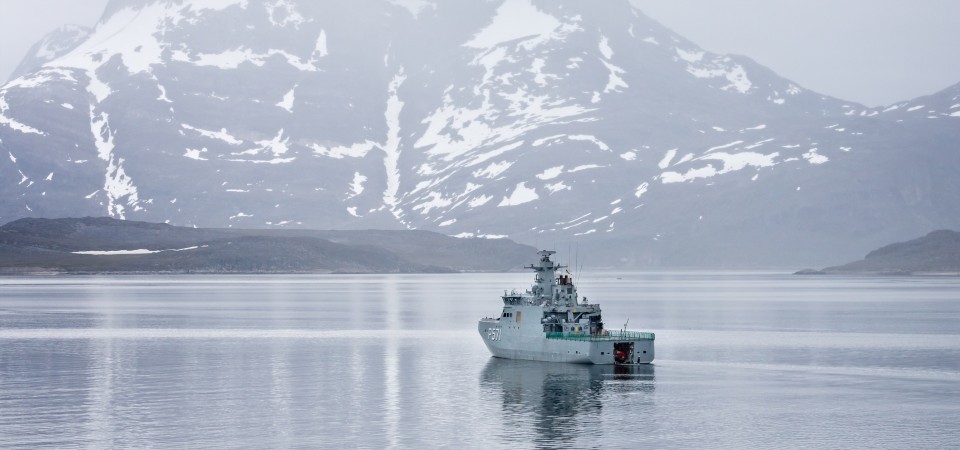
Greenland, the world’s largest island and a part of the kingdom of Denmark, has an abundance of critical minerals offering wealth and business opportunities. But the US president is also making a big deal out of the need to secure Greenland for US national security. He has repeatedly stated the danger from Russia and China, whose ships, he says, stalk the island’s waters.
Publicly, at least, Russia has no problems with Trump’s ambitions in Greenland. Vladimir Putin has declined to criticise the Trump administration’s acquisitive comments, saying that the US has long had plans to incorporate Greenland and that the island’s future has “nothing to do with us”.
Russia’s vision doesn’t rule out the possibility of economic cooperation with America in the Arctic. After Putin and Trump met in August 2025 in Alaska, Russia mooted the idea of a “Putin-Trump tunnel” across the Bering Sea, a vision to which Trump responded favourably.
The Chinese, meanwhile, are not happy about Trump’s designs on Greenland. They tend to see the Arctic as a global commons in which non-Arctic states have an equal stake. So they are unhappy at the notion of any sort of arrangement that involves US or Russian spheres of influence in the Arctic.
The US has been trying to acquire Greenland since 1867 when, fresh from buying Alaska from Russia, the secretary of state William Seward unsuccessfully raised the idea of purchasing Greenland and Iceland from Denmark. Harry Truman offered US$100 million (£74 million) for Greenland in 1946, but Denmark refused. Instead the two countries agreed a treaty in 1951 giving the US considerable latitude to deploy thousands of US troops and install the weather stations and early warning systems that characterised cold war politics.
But when the Soviet Union collapsed, heralding an end to the cold war, Greenland was relegated in importance. The US presence in Greenland went from more than 10,000 personnel on 50 bases to a single settlement at Pituffik space base (formerly Thule air base) with about 150-200 people.
But the Ukraine war, increased assertiveness from Russia and China in the region and the steady melt caused by climate change have reinvigorated US interest in the Arctic region. And in the US president’s view, Greenland is a strategic vulnerability.
Continues…
 For the full article by Professor Caroline Kennedy-Pipe visit the Conversation.
ENDS