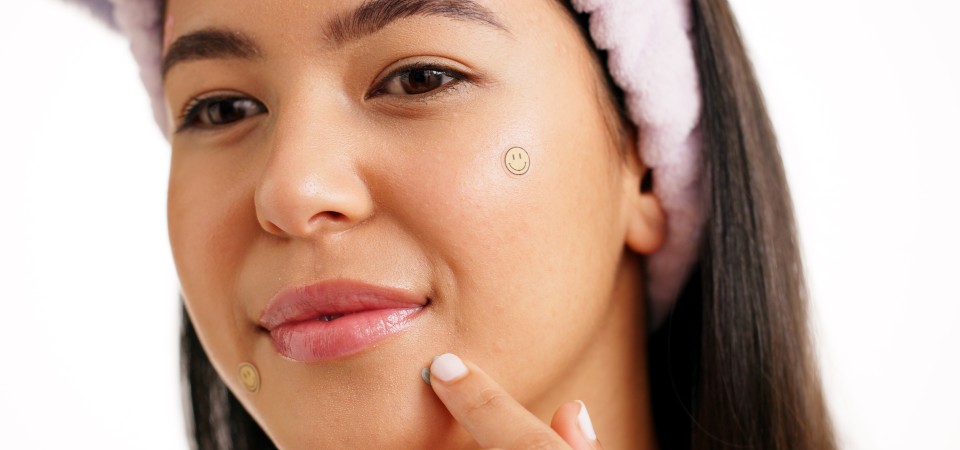
You may have noticed people out and about with little stickers on their faces. Perhaps you’ve seen moons, stars, clouds or even smiley faces adorning people’s cheeks and chins. Maybe you wear them yourself. While some people do wear them as accessories, these colourful stickers are medicated “pimple patches”, designed to treat spots or acne.

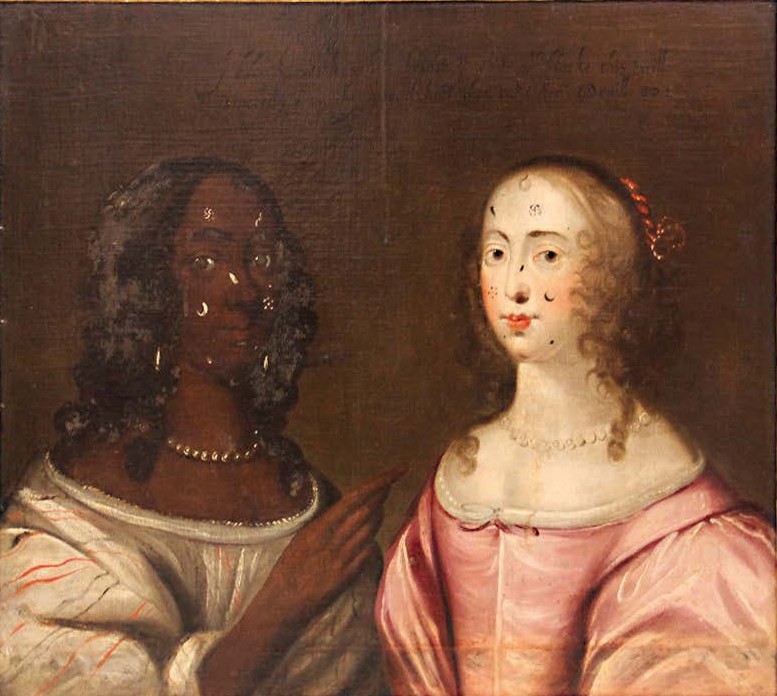
Two Women Wearing Cosmetic Patches, painter unknown (circa 1650). Compton Verney Art Gallery/Canva
Some of the patches simply contain a gel formula, which keeps the emerging blemish moist to aid healing. Some wearers opt for near-transparent film patches to get the benefit in a more inconspicuous way.
Far from a new fad, beauty patches have a long history. The trend first took off in 17th-century Europe, with patches made from paper, silk or velvet, or even fine leather, cut into lozenge shapes, stars or crescent moons.
They could be made in many colours, but black was generally preferred as it made a stark contrast to the idealised pale face of western upper-class men and women, who saw this complexion as a status symbol, showing they did not go outdoors to work. The play Blurt, Master-Constable from 1602 explains another appeal of the patches – when well applied, they could “draw men’s eyes to shoot glances at you”.
Mentions of patches occur regularly in print from the late 16th and early 17th century. Just like today, beauty patches had a dual function. In his 1601 play Jack Drum’s Entertainment, John Marston explains that: “Black patches are worn, some for pride, some to stay the rheum, and some to hide the scab.”
So, some were worn by people wanting to make themselves seem more attractive, and some – sometimes medicated – were used to dry up sores. Some patches were used to conceal blemishes like the scars left by diseases such as smallpox or even syphilis.
Continues…
 For the full article by Dr Sara Read visit the Conversation.
ENDS
Notes for editors
Press release reference number: 25/187
Loughborough is one of the country’s leading universities, with an international reputation for research that matters, excellence in teaching, strong links with industry, and unrivalled achievement in sport and its underpinning academic disciplines.
It has been awarded five stars in the independent QS Stars university rating scheme and named the best university in the world for sports-related subjects in the 2025 QS World University Rankings – the ninth year running.
Loughborough has been ranked seventh in the Complete University Guide 2026 – out of 130 institutions.
This milestone marks a decade in the top ten for Loughborough – a feat shared only by the universities of Oxford, Cambridge, LSE, St Andrews, Durham and Imperial.
Loughborough was also named University of the Year for Sport in the Times and Sunday Times Good University Guide 2025 - the fourth time it has been awarded the prestigious title.
In the Research Excellence Framework (REF) 2021 over 90% of its research was rated as ‘world-leading’ or ‘internationally-excellent’. In recognition of its contribution to the sector, Loughborough has been awarded eight Queen Elizabeth Prizes for Higher and Further Education.
The Loughborough University London campus is based on the Queen Elizabeth Olympic Park and offers postgraduate and executive-level education, as well as research and enterprise opportunities. It is home to influential thought leaders, pioneering researchers and creative innovators who provide students with the highest quality of teaching and the very latest in modern thinking.