
Published in the journal New Media and Society, the research analysed 1,364 public posts on X (formerly Twitter) that used the term “Jew goal” or the hashtag #JewGoal between 2010 and 2020.
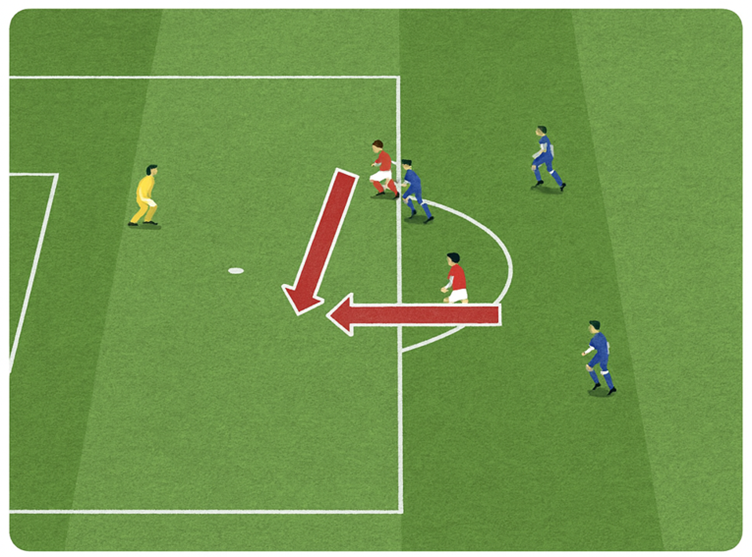
The phrase refers to a particular type of goal in the FIFA video game (see image), where a player squares the ball for an easy tap-in instead of shooting, but draws upon long-standing antisemitic stereotypes.
The study shows how this term, framed as a joke or as light-hearted football commentary, became a digital shorthand that embedded racist tropes into everyday online fandom.
One of the authors, Dr Itoiz Rodrigo-Jusué, from the Centre for Research in Communication and Culture at Loughborough University, said: “Our study shows that what might appear as harmless banter is, in fact, a vehicle for normalising antisemitism.
“The #JewGoal hashtag spread not because of its meaning, but because of the enjoyment users derived from repeating it.
“This repetition created a shared identity that allowed discriminatory language to thrive unnoticed within everyday football and gaming culture.”
The research was conducted by academics from Loughborough University, Sheffield Hallam University, Dublin City University and Leeds Beckett University.
Their findings highlight how a slur from gaming culture moved seamlessly into real-world sports talk, revealing the blurring of online and offline spaces and the persistence of antisemitic language in digital cultures.
The paper shows that although the term was often used jokingly, its repetition created an online environment where users bonded around discriminatory language.
Many posts used humour, irony, or “if you know, you know” references to signal insider status within gaming and football subcultures.
In doing so, the hashtag functioned as a coded marker of belonging, while simultaneously spreading stereotypes.
The researchers argue that this repetition reflects what psychoanalytic theory calls jouissance – a form of excessive enjoyment attached to language, where the act of using the term becomes pleasurable regardless of its meaning.
This helps explain why users continued to employ the hashtag even when its content became more extreme.
Although some posts simply mocked gameplay, many used explicitly antisemitic references, including Holocaust imagery, Jewish cultural symbols and stereotypes.
The majority of posts (1,330 out of 1,364) fell into categories of antisemitism or casual hate.
Lead author, Dr Jack Black, from Sheffield Hallam University, said: “The findings reveal how seamlessly antisemitism circulates through digital culture – especially when disguised as entertainment, jokes or rivalry.
Distinguishing between ‘banter’ and racism becomes less useful when harmful language spreads through shared enjoyment rather than explicit intention.
“It’s important to try and gain a deeper understanding of how hate operates within online communities, particularly where gaming, sport and social media intersect.”
Read the paper: #JewGoal: Llanguage, enjoyment, and the persistence of antisemitism in online gaming and sports communities
ENDS