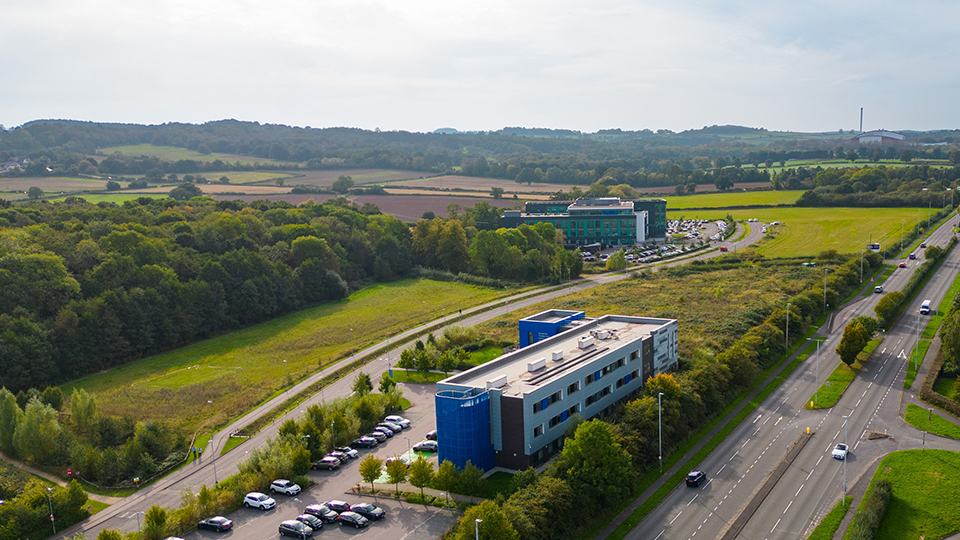
The project is supported by East Midlands Freeport as part of the East Midlands Zero Carbon Innovation Centre (EMZCIC), which aims to accelerate research in renewable energy and advanced manufacturing to support the decarbonisation of heavy transport. Bringing together the research strengths of Loughborough University and the University of Nottingham with industrial partners, EMZCIC will focus on power electronics, hydrogen propulsion systems and electrification technologies, with advanced laboratories enabling industry to adopt sustainable solutions.
Linking solar PV directly to electrolysis enables truly low‑carbon hydrogen – maximising hydrogen’s role in the future energy mix, for heavy transport and other to hard‑to‑abate industries.
At Loughborough, EMZCIC will comprise a hydrogen production demonstrator and a solar PV system-level research facility. Building on that foundation, the Cohort 2 brief asks EnerHy’s new researchers to work as a single team: define the right measurements, specify specialist instrumentation, plan how everything meshes with the solar farm and research workflows, and co‑develop a thermally integrated PV electrolyser prototype that can be tested, iterated and linked to the measurement platform.
Dr Tom Betts, Reader in Applied Photovoltaics at Loughborough University, said: “This is a timely challenge: integrated, data‑driven energy systems – and the people who can deliver them – underpin energy security and net zero. The heat exchanger keeps the electrolyser in its temperature sweet spot, enabling steadier, more efficient hydrogen output.”
He continues: “EnerHy gives students the best of both worlds: independent research and hands‑on, team‑based industry challenges. This design‑and‑build double bill will show how they perform under pressure across disciplines, bringing complementary skills and building the capabilities needed for future net‑zero leadership.”
Students will identify the most meaningful measurements, select the right instrumentation, and design secure physical‑and‑digital integration with the farm, research teams and data storage – delivering a functional prototype built on sound design decisions and robust integration planning that can evolve as research questions change.
In parallel, the cohort will specify the electrolyser’s core components and build a full‑scale prototype thermally integrated with PV input, designing its interface with the solar measurement system to capture and interpret performance data – creating a credible, open‑ended research platform that balances scientific ambition with engineering practicality.
From January, Cohort 2 will move from concept to construction – designing, ordering and assembling full‑scale prototypes – before demonstrating their solutions to coincide with the opening of Loughborough’s EMZCIC facilities and the annual EnerHy conference in the summer. Students will test ideas, uncover constraints, document decisions and refine their engineering under realistic timelines and interdisciplinary collaboration, gaining experience that translates directly to industry and research careers.
Katie Greenhalgh, Head of Green Growth and Inclusion at East Midlands Freeport, said: “We’re delighted to support EnerHy’s design‑and‑build challenge – an example of the East Midlands Freeport vision in action, harnessing our central location, transport links and expertise to enable investment, innovation and collaboration.”
She concludes: “Through EMZCIC, we’re backing a programme that grows skills, creates pathways into high‑quality jobs and accelerates regional decarbonisation. We wish EnerHy’s students every success and look forward to their progress next year.”
EnerHy’s annual design and build project is a distinct feature of how its researchers learn leadership skills together addressing challenges set by industry and civic partners. Earlier this year, EnerHy’s first PhD cohort designed and built a pipeline inspection gauge to apply hydrogen-resistant lining – responding to a real-world challenge set by Cadent Gas, the UK’s largest gas distribution network, to overcome hydrogen embrittlement.
Further information about EnerHy is available on the EnerHy website.