Background:
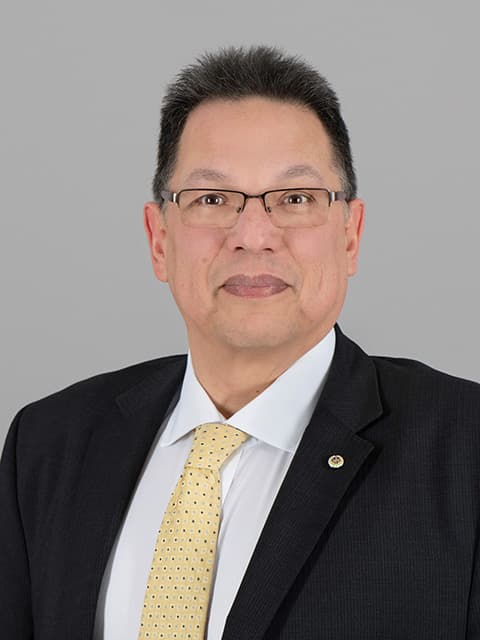
Dr. Mustafa Megahed is the founder of AMP Technologies (Advanced Modelling Platform), a company dedicated to delivering efficient multi-physics simulation tools integrated with reduced-order modelling. His mission is to simplify and accelerate manufacturing process modelling through scalable, high-fidelity digital solutions.
Previously, Dr. Megahed served as Research and Innovation Manager and Scientific Committee Fellow at ESI Group, where he began his tenure in 2004. He was instrumental in developing ESI’s computational fluid dynamics (CFD) capabilities and later spearheaded the creation of the ESI Additive Manufacturing Center of Excellence, driving innovation at the intersection of simulation and advanced manufacturing.
Inspired by the digital nature of additive manufacturing his research interests expanded to cover machine learning & manufacturing digitization.
Dr. Megahed has directed numerous multidisciplinary research projects in Europe, US, and in Southeast Asia. He has contributed to several scientific books and has published more than 40 peer-reviewed articles. He assists in reviewing new publications and is a member of VDI, AM-Bench, Metallurgy Europe, TMS, and NAFEMS Manufacturing Group.
Qualifications:
- Internation Additive Manufacturing Qualification Council (IAMQS), Business for Additive Manufacturing, Sector Skills Strategy in Additive Manufacturing - June 2021
- OpenFOAM Foundation & Advanced Courses, ESI Group - September 2020
- Dr.-Ing. - Mechanical Engineering, Technical Thermodynamics. RWTH Aachen, Germany - March 1993
- B.Sc. with Honors - Mechanical Engineering. Alexandria University, Egypt - June 1985
Key awards:
-
Patent DE 101 42 192.3: Flow Management
Outline of main research interests:
- Additive Manufacturing
- Manufacturing process modelling
- Material Modelling
Research grants and contracts:
European Union
- H2020 CAELESTIS, Grant number 101056886, 2022 – 2025
- H2020 DOMMINIO, Grant number 101007022, 2020 - 2024
- H2020 HIPERMAT, Grant number 958196, 2020 - 2024
- H2020 – FoF, DIMOFAC, Grant number 870092, 2019 - 2024
- H2020 – FoF, LEVEL-UP, Grant number 869991, 2019 - 2022
- H2020 – FoF, INTEGRADDE, Grant number 820776, 2018 - 2023
- H2020 – PHOTONICS, ENCOMPASS, Grant number 723833, 2016 -2020
- H2020 Open-HYBRID, Grant number 723917, 2016 - 2019
- H2020 EMUSIC, Grant number 690725, 2016 – 2019
France
- ANR AMANDE, Grant number ANR-21-CE10-0004, 2019 - 2023
- ANR PALOMA, Grant number ANR-21-CE10-0012, 2019 - 2023
Germany
- BMBF – DPP Open, Grant number 13N15426, 2020 – 2025
- BMBF – GenChain, Grant number 13N14261, 2016 - 2019
- BMBF - Print & Track, Grant number 20X1726E, 2018- 2021
United Kingdom
- COMET, SMART Expertise funding stream, 2019 - 2022
USA
- DARPA Open Manufacturing, Contract number HR0011-12-C-0037, 2012 - 2018
- ONR Quality Made, America Makes project number 1111, 2019 - 2023
Recent publications:
Title: Laser-based powder bed fusion thermal history of IN718 parts and metallurgical considerations https://doi.org/10.55092/am20250003
This work presents an efficient thermal model that resolves the laser trajectory throughout the additive manufacturing process of full-scale metallic parts. It details the modelling methodology, introduces an experimental setup designed to establish well-defined thermal boundary conditions for validation, and applies the validated model to analyse thermal history effects on final part properties.
The same modelling framework was further employed to assess the impact of scan path resolution—including skywriting effects—on thermal behaviour, under the study titled: Scan Path Resolved Thermal Modelling of LPBF (https://doi.org/10.1016/j.addlet.2022.100047)
Selected publications:
Title: Understanding Inhomogeneous Mechanical Properties in PBF-LB/M Manufactured Parts Due to Inhomogeneous Macro Temperature Profiles Based on Process-Inherent Preheating
https://doi.org/10.3390/jmmp7030088
The high-resolution laser trajectory model offers efficient thermal simulation but depends on a “readable” printing file — the input formats of which are not consistently accessible with commercial printers. To address this limitation, a simplified model was developed that uses a coarser representation of deposition sequences. Despite its reduced fidelity, this model was benchmarked against the detailed laser scan path results and demonstrated sufficient accuracy to capture part-scale thermal history, enabling the identification of hot and cold spots across the build.
External roles and appointments:
- Founder and CEO of AMP – Advanced Modelling Platform
- Member NAFEMS: Metal AM Group as well as other Manufacturing modelling Groups
- Member VDI Germany
- Member TMS USA