
Cricket
Prof Mark King talks about his cricket research
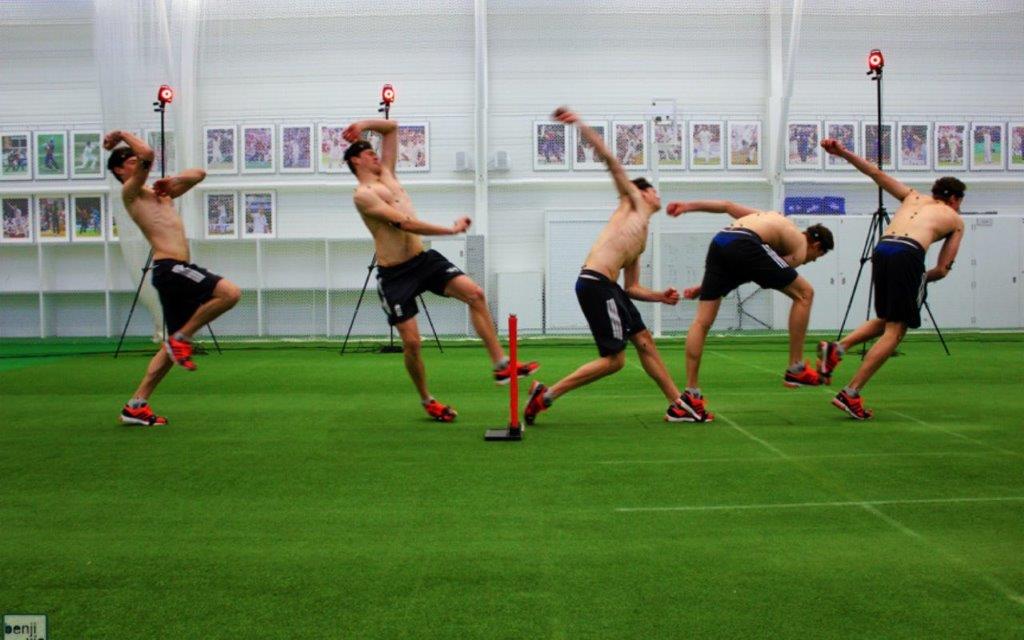
The Cricket Research branch of Sports Biomechanics aims to gain understanding of the techniques used in cricket to optimise performance, prevent injury and ensure legality of the game is upheld. Such research, for example, can explain what characteristics of fast bowling technique associate with bowling velocity or lumbar bone stress injuries.
Much of the research undertaken at Loughborough University in collaboration with the England and Wales Cricket Board since 2004. The results of the research at Loughborough have had an impact upon coaching practice across the whole game, and also at an individual bowler level.
The biomechanics and motor control research at Loughborough is utilises both elite male and female cricketers and is complimented by research using computer simulations models. Loughborough is one of only 5 sites globally, accredited as an ICC testing centre for bowling legality analysis.
Any enquires into biomechanics cricket research should be directed towards Prof Mark King.
Specific areas:
Current Staff
- Prof Mark King: Professor of Sports Biomechanics
- Prof Nick Peirce: Honorary Professor in Clinical Sports Medicine
- Dr Stuart McErlain-Naylor
Current PhD Students
- Matt Lamb: Computer Simulation Modelling of Fast Bowling to Minimise Lumbar Stress Fractures in Cricket
- Kaushal Manawadu: A biomechanical analysis of fast bowling variations
- Hannah Jowitt: Optimising Women’s Fast Bowling Performance
- Shruti Bhandurge: Biomechanical movement pattern recognition associated with pace bowling performance
External Collaborators
- Dr Paul Felton: Factors limiting fast bowling performance in cricket. Senior Lecturer at Nottingham Trent University
Cricket PhD Graduates
- Dr Laura Keylock: Lumbar vertebral adaptation and bone stress injury in adolescent cricket fast bowlers
- Dr Chris Peploe: The kinematics of batting against fast bowling in cricket
- Dr Mike Harwood: Scaling the pitch for junior cricketers
- Dr Liam Sanders: Factors affecting performance in elite finger-spin bowling
- Dr Peter Worthington: A biomechanical analysis of fast bowling in cricket
- Dr Pete Alway: Risk factors to lumbar bone stress injuries and lumbar spine adaptation in elite cricket fast bowlers
Experts in Sport podcast
In July 2023 Prof Mark King was interviewed by Dr Stuart McErlain-Naylor about the 19 Years of Biomechanics Research into Elite Cricket Bowling. Professor King details the attributes of fast cricket bowling, as well as diving into techniques and ways to avoid injuries. Additionally, Prof King explains what happens during biomechanics testing sessions, as well as what characteriseselite athletes.
The pair also discussed the impact of AI, including how it may play a part in the future of elite cricket biomechanics.